

Hanging Hammock Chair with Stand: Buying Guide
A hanging hammock chair with stand is a freestanding seat that swings from its own frame, so you get a floating, cocoon-like lounger without drilling into a ceiling or beam. For most Hong Kong homes, where drilling into concrete is often restricted by landlords or management offices, the stand is what makes a hammock chair practical. This guide covers how to size one, which materials survive our humidity, and how to set it up so it stays safe and good-looking.
Why a Stand Makes Sense in Hong Kong
A freestanding frame solves the biggest problem with hanging seats in Hong Kong: finding something safe to hang from. Rental flats often prohibit drilling, balcony ceilings are frequently concrete slabs with limited anchor options, and many pergolas on rooftops are decorative rather than structural.
A stand also lets you move the chair. You can shift it toward the sea breeze in the evening, tuck it away before a typhoon signal goes up, or reposition it when you host friends. That flexibility matters on a typical balcony of only a few square meters, where the layout often changes between everyday use and entertaining.
The trade-off is footprint. A stand needs floor space and a clear swing zone, which we cover in the sizing section below. If you are weighing a ceiling-hung option against a freestanding one, our guide to the hanging patio chair lays out the differences in more detail.
Types of Hammock Chair and Stand Setups
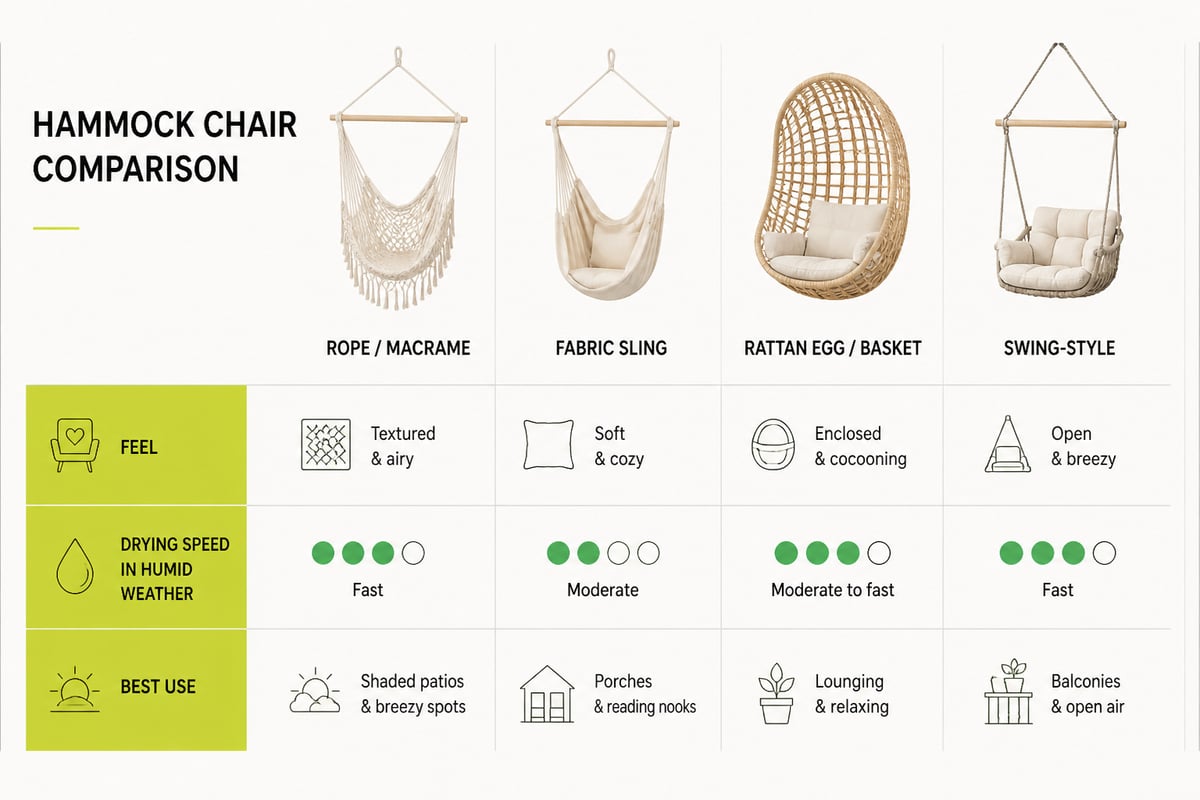
Most hammock chairs sold with stands fall into a handful of styles, and each suits a different way of sitting.
- Rope or macrame hammock chairs: Woven or knotted rope, usually with a wooden spreader bar. They look relaxed and airy, and they drain and dry quickly after rain.
- Fabric sling chairs: A single piece of canvas or polyester hung from a bar. These tend to be the softest to sit in, but fabric holds moisture longer in humid weather.
- Rattan or wicker egg and basket chairs: A rigid woven shell with a cushion inside. They feel more like a piece of furniture than a hammock, and they hold their shape for reading or working on a laptop.
- Swing-style chairs: A hanging seat with a firmer base that sits upright rather than reclined. This suits shorter sits and family use. You can see how these differ in our guide to an outdoor swing chair with stand.
Stands also vary. Some are a single arc that the chair hangs from, others are A-frame or tripod designs, and some use a wide-footed base for extra stability. Arc stands look elegant but need a heavier base to resist tipping, while A-frames spread load more evenly.
Weight Capacity: Check the Whole Setup
The safe limit of a hanging hammock chair with a stand is set by its weakest component, not its strongest. Bob Vila notes that a typical hammock-chair weight capacity is about 300 lb, and that most hammock stands can support more than 400 lb, but the chair's lower rating may set the limit for the complete setup.
In practice:
- Find the rated capacity of the chair itself, the stand, and any hanging hardware such as carabiners, chains or swivels.
- Use the lowest of those numbers as your real limit.
- Leave a margin. If two adults will share a wide chair, or you have children who bounce and climb in, choose a higher-rated model.
- Remember that dynamic load is greater than static load. Dropping into a chair or swinging hard puts more stress on the frame than sitting down gently.
Ask any seller for ratings on each component separately, rather than relying on a single headline number. If a listing only gives one figure, check whether it describes the stand, the chair, or both.
Sizing and Space: How Much Room You Need
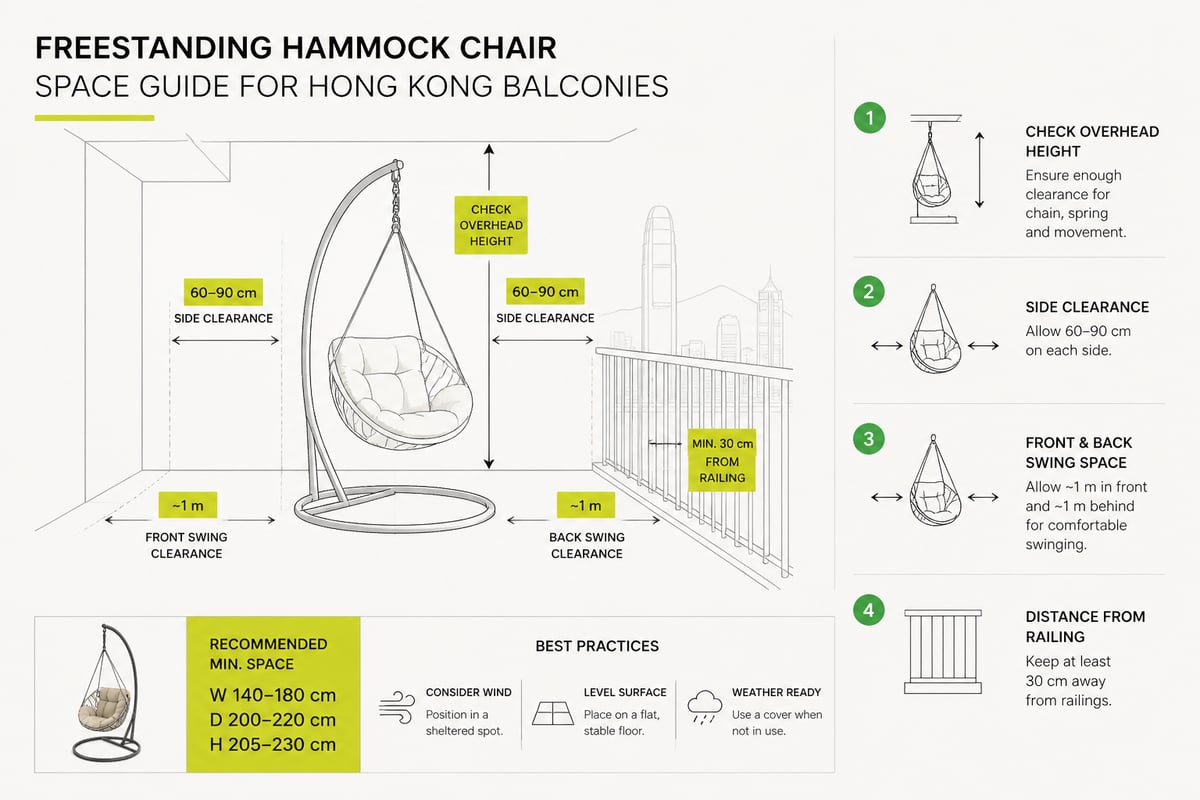
A stand needs floor space plus a swing zone, so measure your balcony or rooftop corner before choosing a model. Bob Vila's guidance is that a hammock stand should generally be about 2 ft longer than the hammock it supports, with the right length also depending on hammock size and placement. Hammock chairs are shorter than full hammocks, but the principle holds: the frame should comfortably exceed the chair's footprint.
Use these rules of thumb when measuring:
- Clearance to the sides: Leave at least 60 to 90 cm (2 to 3 ft) on each side so the chair can sway without hitting a wall, railing or planter.
- Clearance in front and behind: Allow room for your legs to extend and for the chair to swing back, roughly 1 m in each direction.
- Overhead height: Check for balcony ceilings, awnings, or air-conditioner pipes, since many Hong Kong balconies have low or cluttered ceilings. Add the height of the stand plus a small buffer.
- Railing and drop: If your balcony has a glass or low railing, position the chair so a hard swing never points toward an open edge.
Many Hong Kong balconies are narrow, so a compact A-frame or a model with a smaller base often fits better than a large arc stand. On a rooftop or garden you have more freedom to choose a bigger frame and a wider chair.
Materials That Survive Hong Kong's Humidity
Hong Kong's humid season, strong sun and typhoon rain mean material choice strongly affects how well your chair holds up over time. Salt-laden air near the coast and constant moisture inland both attack weaker finishes.
Frame and stand
- Powder-coated steel: Strong and affordable, but the coating must be thick and even. Any chip lets moisture reach the metal and rust spreads quickly in our climate. Check bolt points and the base where water collects.
- Aluminium: Naturally rust-proof and lighter, so it is easier to move, though it can feel less rigid at lower price points.
- Treated hardwood such as teak: Handsome and durable if oiled periodically, though heavier and more expensive.
Seat material
- Synthetic rattan (PE wicker): Rust-proof, UV-stable and easy to wipe clean, which makes it a strong match for humid, sunny balconies.
- Solution-dyed polyester or acrylic fabric: Resists fading and dries faster than cotton.
- Cotton rope and canvas: Comfortable and attractive, but prone to mildew in Hong Kong's humidity unless you bring them inside or cover them during wet spells.
If you are choosing between a rattan style and a fabric one, rattan generally needs less upkeep here. Our look at the wicker egg chair explains how woven shells cope with moisture and sun.
Comfort, Cushions and Everyday Use
How you plan to sit decides which design you will actually use. Think about whether you want a lie-back lounge, an upright reading perch, or a seat for chatting with friends.
A deep, reclined hammock cocoon is superb for napping and unwinding after work, but harder to get out of and less suited to guests who want to chat. A firmer egg or basket shape keeps your posture more upright. Wide-seat designs fit two small people or one adult with a child, but check the rated capacity first.
Cushions deserve attention. Look for quick-dry foam and removable covers in solution-dyed fabric, since permanently attached cushions trap damp. Having a spare cover to rotate in humid months extends life considerably. A small side table or a hook on the stand is a useful extra for drinks and a book.
Setting It Up Safely
Careful assembly and a gradual first test matter more than the brand name on the label. Follow these steps for a stable, safe setup:
- Pick a level surface. Tiles on balconies are often slightly sloped for drainage, so check with a level and use rubber feet or shims if needed.
- Assemble fully before hanging. Tighten every bolt, then recheck after a few days of use, since vibration loosens fittings.
- Set the seat height correctly. Your feet should be able to rest on the floor when seated, with a little room to push off. Adjusting for rope stretch is covered well in this indoor hammock chair installation guide, which recommends testing gradually after installation.
- Test in stages. Sit gently first, then add your full weight, then rock lightly before relaxing in it fully.
- Inspect regularly. Look at ropes, chains, carabiners and welds for fraying, rust or cracks.
On a rooftop, weigh down or anchor the base where permitted, since wind loads are higher at height.
Typhoon Season and Weather Care
A freestanding chair is easy to protect, which is one of its quiet advantages in Hong Kong. When a typhoon signal is forecast, bring the chair and cushions indoors, or at minimum lay the stand down and secure it. A light hammock chair can become a projectile in strong gusts, and falling furniture is a safety and liability concern in multi-storey buildings.
For everyday care:
- Wipe the frame and seat with mild soap and water to remove salt and dust.
- Dry cushions fully in the sun before storing them.
- Use a breathable cover rather than plastic sheeting, which traps humidity and encourages mildew.
- Touch up any chipped paint promptly on metal frames.
Matching Your Chair to the Rest of the Space
A hammock chair works best as part of a considered layout, not an isolated piece. On a balcony, pair it with a slim side table and a couple of planters to create a corner that feels intentional. On a rooftop or garden, it can sit beside a larger seating group and act as an extra lounge spot when you host.
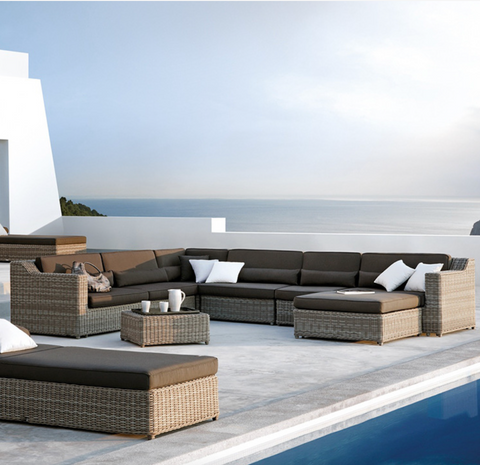
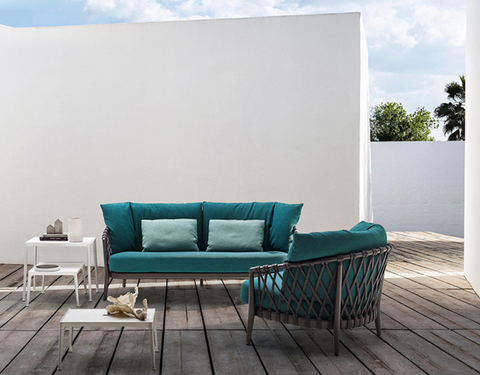
Choose a tone that complements the rest of your furniture. Natural rattan blends with greenery, while charcoal frames feel more contemporary against city views. If you are building out a fuller seating area, a roomy outdoor sofa gives guests somewhere to gather while the hammock chair becomes the favorite solo spot. Hong Kong Outdoor Furniture offers a Outdoor Sofa collection designed to bring indoor comfort to balconies, rooftops and patios, and built to withstand Hong Kong's humid climate.
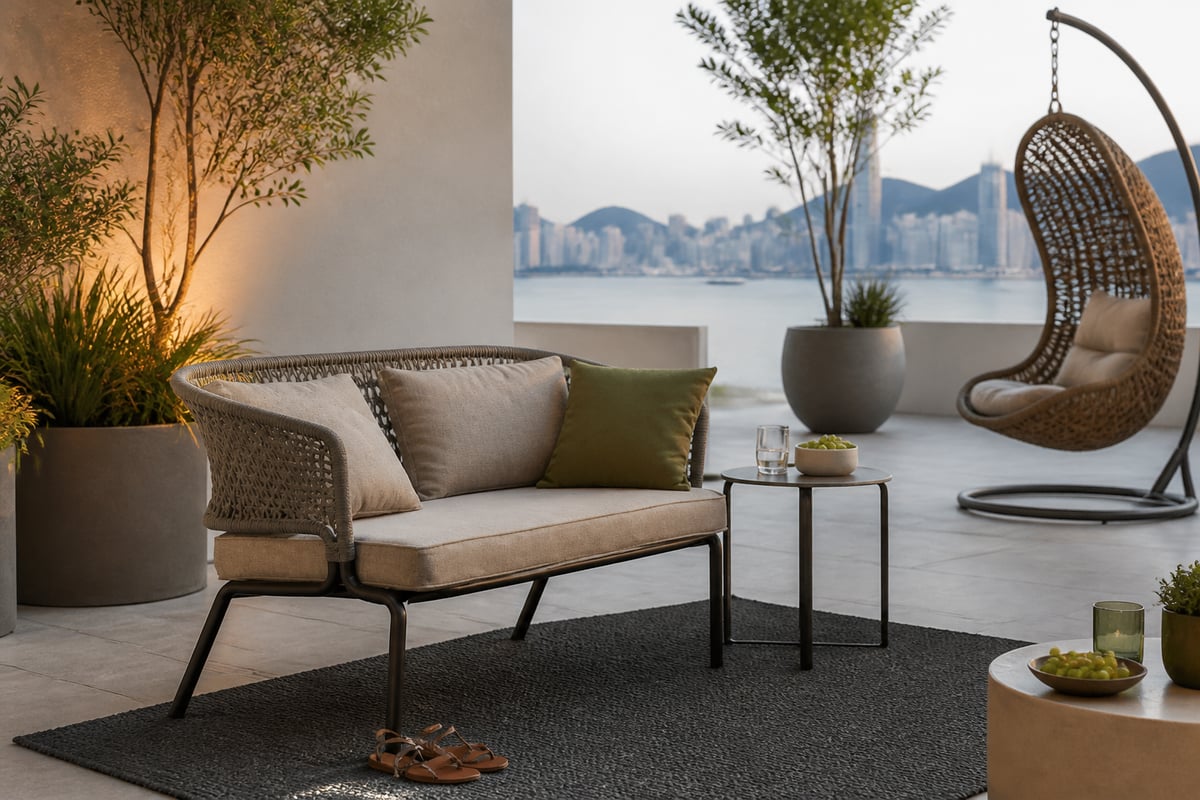
For more ideas on tight spaces, see our guide to balcony outdoor chairs, and if you want to browse freestanding seating more widely, the standalone collection is a good place to start.
Buying Checklist
Before you buy, run through this short list:
- Is the chair's and stand's weight rating clear, and is the combined limit enough for your household?
- Does the footprint, swing zone and height fit your balcony, rooftop or garden spot?
- Are the frame and seat materials rust-proof and mildew-resistant?
- Are cushion covers removable and quick-drying?
- Can you move or fold the stand away when a typhoon signal is raised?
- Does delivery work for your building? Check whether the seller handles stairs if there is no lift.
- Are payment options flexible if you are furnishing a whole space at once?
Start by measuring your balcony or rooftop corner, including the swing zone and ceiling height, then note the weight rating you need so you can compare models fairly. Once you know your dimensions, it is easier to decide whether a compact frame or a larger lounge suits you. If you want furniture built for Hong Kong's humidity, with made-to-order pieces, delivery across Hong Kong including stair delivery per floor, and installment payments through hoolah, the team at Hong Kong Outdoor Furniture can help you plan the whole space around a seat like this, starting with the Outdoor Sofa range, so you can View Sofa Set Collection and picture how a complete outdoor lounge could look at home.