

Outdoor Bench Seat Guide for Hong Kong Homes | 2026
An outdoor bench seat transforms any exterior space into a welcoming retreat, whether you're furnishing a Mid-Levels balcony, a rooftop terrace in Sai Ying Pun, or a Discovery Bay garden. In Hong Kong's compact living environment, where every square foot counts, the right bench delivers flexible seating, visual interest, and practical storage without overwhelming your outdoor area. Beyond simple functionality, a thoughtfully chosen outdoor bench seat becomes a design statement that enhances how you live, entertain, and relax outdoors throughout the year, even as humidity, typhoons, and intense sun test every piece of furniture you place outside.
Why an Outdoor Bench Seat Works for Hong Kong Homes
Space efficiency drives much of Hong Kong's design thinking, and an outdoor bench seat excels in tight quarters. Unlike individual chairs that require circulation space on all sides, a bench sits flush against a railing, wall, or planter, freeing up valuable floor area for movement, potted plants, or a small side table.
Key advantages for Hong Kong outdoor living:
- Flexible capacity: Seat two adults comfortably or squeeze in four children during a family gathering
- Built-in boundaries: Define zones on an open rooftop or long balcony without partitions
- Weather resilience: Quality benches withstand Hong Kong's 80–90% humidity and sudden downpours
- Lower visual weight: A single bench feels less cluttered than multiple chairs, preserving sightlines and openness
Many Hong Kong homeowners also appreciate that a bench can double as a display surface for lanterns during Mid-Autumn Festival or as extra prep space when grilling on a compact balcony barbecue.
Material Choices That Survive the Climate
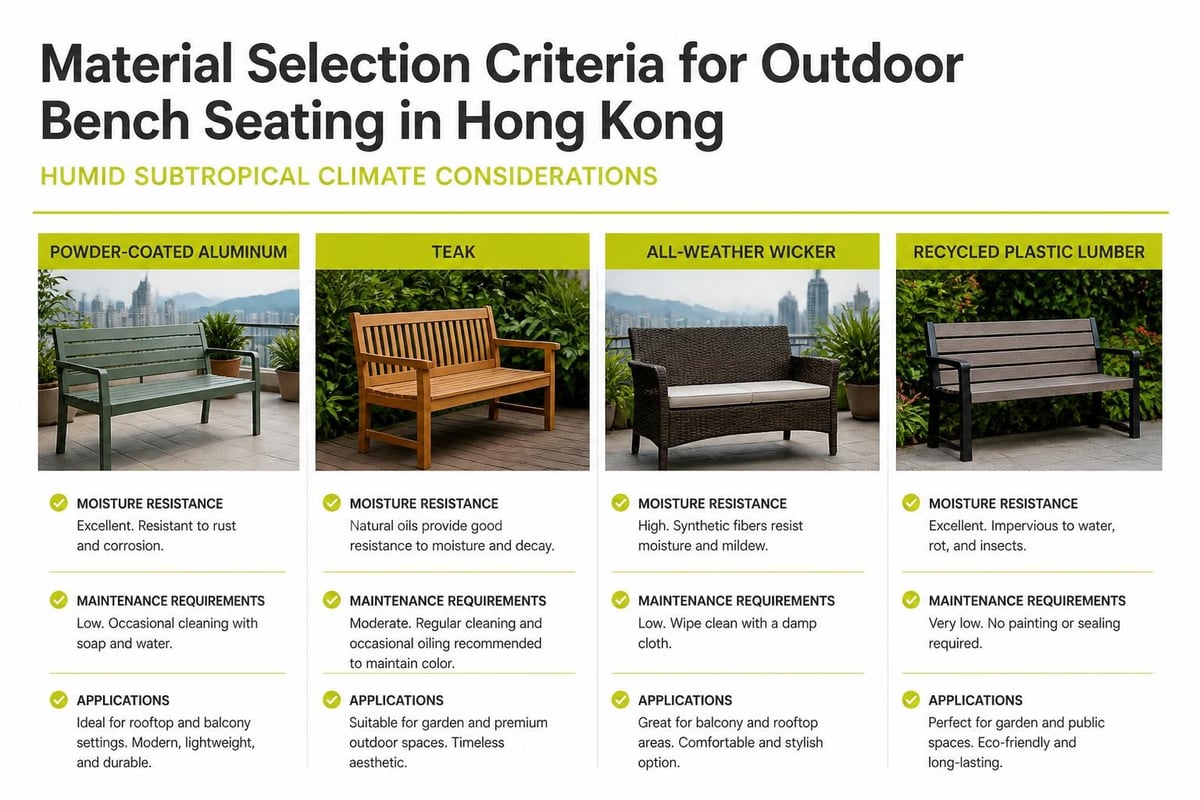
Hong Kong's subtropical monsoon climate demands materials that resist moisture, UV degradation, and salt air (especially in coastal neighborhoods like Stanley or Repulse Bay). The U.S. Environmental Protection Agency's sustainable materials guidance highlights life-cycle durability as a key selection criterion, and that principle applies directly to choosing an outdoor bench seat here.
| Material | Humidity Resistance | Maintenance | Best Use Case |
|---|---|---|---|
| Powder-coated aluminum | Excellent | Wipe clean monthly | Modern rooftops, poolside |
| Teak (A-grade) | Excellent | Oil quarterly | Traditional gardens, Discovery Bay |
| All-weather wicker | Very good | Hose off, dry thoroughly | Covered balconies, Lantau homes |
| Recycled plastic lumber | Excellent | Minimal | High-traffic communal areas |
Powder-coated aluminum frames paired with quick-dry foam cushions covered in solution-dyed acrylic fabric offer the best balance of comfort, weight, and weather performance for most Hong Kong balconies and rooftops.
Design Styles to Complement Your Outdoor Space
An outdoor bench seat should harmonize with your home's architecture and your personal aesthetic. Hong Kong's diverse building stock ranges from heritage shophouses in Sheung Wan to sleek high-rises in West Kowloon, each calling for a different design approach.
Contemporary Minimalist
Clean lines, neutral tones, and slim profiles suit modern apartments in Quarry Bay or Olympic Station developments. Look for benches with:
- Straight aluminum or stainless-steel frames
- Monochrome cushions in charcoal, taupe, or white
- Integrated storage beneath the seat (perfect for cushion storage during typhoon season)
- Low-profile designs that don't block harbor or mountain views
Tropical Resort
Bring a Bali-inspired or Maldives-style vibe to your Clearwater Bay villa or Sai Kung garden with benches that feature:
- Natural teak or mahogany frames with visible grain
- Plush, oversized cushions in ocean blues or sandy beiges
- Curved arms and rounded edges
- Pairing with outdoor rugs and potted palms
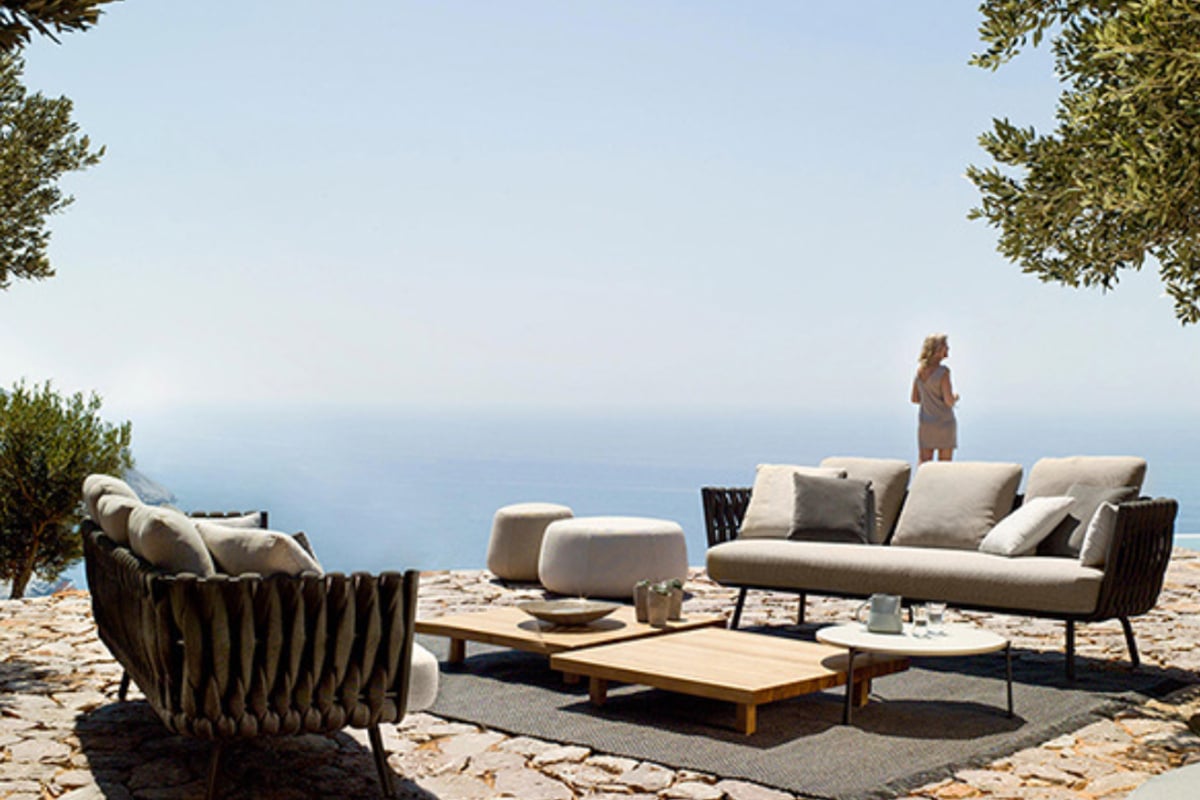
This style works beautifully alongside an outdoor sofa collection that shares the same material palette, creating a cohesive lounge environment.
Industrial Chic
Exposed metal, wire mesh seats, and dark finishes appeal to homeowners in Fo Tan loft conversions or repurposed industrial buildings in Kwun Tong:
- Welded steel frames with matte black or bronze powder coating
- Slatted seats (allow rain to drain immediately)
- Pairing with concrete planters and Edison-bulb string lights
- Minimalist cushions or no cushions at all for pure architectural form
Sizing and Placement Strategies
An outdoor bench seat must fit your space physically and proportionally. Hong Kong balconies typically range from 30 to 100 square feet, and rooftop terraces might offer 200 to 500 square feet, so precise measurements prevent costly mistakes.
Standard bench dimensions:
- Length: 120 cm (two-seater) to 180 cm (three-seater)
- Depth: 50–60 cm (allows comfortable sitting without legs dangling)
- Seat height: 42–45 cm (aligns with dining or lounge posture)
- Back height (if included): 75–85 cm (provides lumbar support)
The 2010 ADA Standards for Accessible Design recommend specific seat heights and clear approach spaces for public benches, and while your private balcony isn't bound by these codes, the ergonomic research behind them ensures comfort for guests of all ages and abilities.
Placement Tips for Small Balconies
When working with a narrow 1.2-meter-deep balcony in Taikoo Shing or Whampoa Garden:
- Mount the bench along the longest wall to maximize usable floor space
- Leave at least 60 cm of clearance in front for safe passage (critical during typhoon prep when you need to move planters indoors)
- Anchor benches securely, especially on high floors where wind gusts exceed 100 km/h during storms
- Position away from air-conditioning condensate drip lines
A corner bench can turn an L-shaped balcony into a cozy nook, while a backless bench placed perpendicular to the railing serves as both seating and a visual divider.
Comfort Enhancements and Accessories
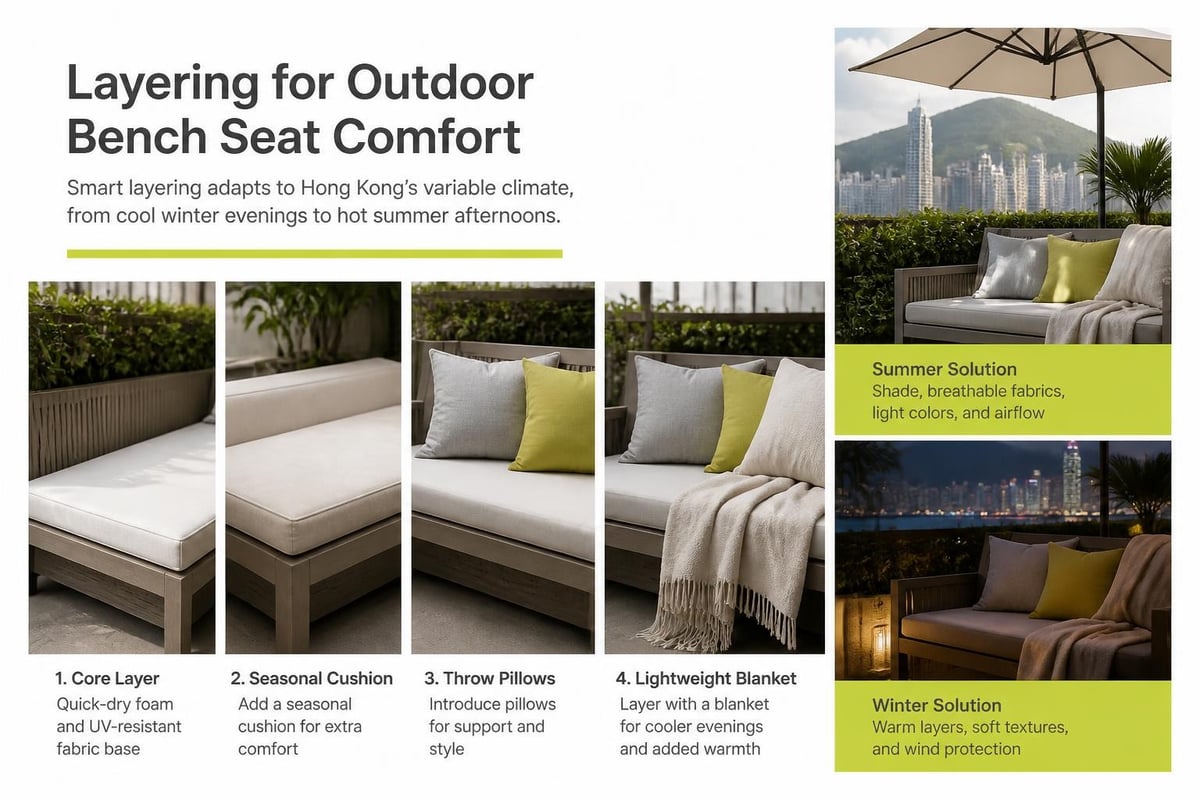
An outdoor bench seat reaches its full potential when you layer in cushions, throws, and thoughtful accessories. Hong Kong's weather swings from 15°C winter evenings to 35°C summer afternoons, so adaptable comfort matters.
Cushion Considerations
Quick-dry foam cores wrapped in UV-resistant, mold-resistant outdoor fabric (Sunbrella, Outdura, or equivalent) are non-negotiable in Hong Kong. Standard polyester-fill cushions absorb moisture and develop mildew within weeks.
- Thickness: 8–12 cm seat cushions, 5–8 cm back cushions
- Ties or Velcro: Prevent cushions from sliding during sudden gusts or when friends shift positions
- Storage: Keep cushions in a ventilated deck box (medium or large sizes work well) during the wettest months (May–August) to extend lifespan
Layering for Style and Function
Add personality and seasonal flexibility with:
- Outdoor throw pillows in vibrant patterns (swap seasonally)
- Lightweight blankets for January evenings (store indoors between uses)
- Side tables or nesting stools for drinks and snacks
- Planters at bench ends to soften hard edges and add greenery
An outdoor parasol positioned behind the bench provides afternoon shade on west-facing balconies, protecting both guests and fabric from UV damage.
Maintenance and Longevity in Hong Kong's Climate
Even premium materials require regular care to look their best year after year. Hong Kong's combination of high humidity, salt air (for coastal properties), and pollution (especially in urban Kowloon districts) accelerates wear if you neglect maintenance.
Monthly Tasks
For aluminum and metal frames:
- Wipe down with a damp microfiber cloth to remove dust and pollutants
- Check joints and welds for early signs of corrosion (white powdery residue)
- Tighten any loose bolts or screws (humidity can cause slight expansion and contraction)
For teak and wood:
- Rinse with a garden hose to remove dirt and bird droppings
- Scrub stubborn stains with a soft brush and mild soap
- Allow to air-dry completely (good ventilation on Hong Kong balconies usually ensures this within hours)
For cushions and fabrics:
- Remove covers and machine-wash on gentle cycle (check manufacturer labels)
- Hang to dry in shade, never direct sun (prevents color fading)
- Inspect zippers and seams for mold or mildew, treat with diluted white vinegar if needed
Seasonal Deep Cleans
Before and after typhoon season (roughly June and October), perform a thorough inspection:
- Move the bench to check for trapped water or debris underneath
- Apply teak oil or sealant to wooden benches (twice yearly maintains color and water resistance)
- Re-tighten all hardware
- Replace any damaged cushion covers before moisture penetrates the foam core
The National Recreation and Park Association provides detailed guidance on park furniture maintenance that translates well to private outdoor settings, emphasizing preventive care over reactive repairs.
Multifunctional Bench Designs
Hong Kong's space constraints reward furniture that serves multiple roles. An outdoor bench seat with built-in storage, fold-down sides, or convertible configurations delivers exceptional value per square foot.
Storage Benches
Hollow benches with lift-up seats hide:
- Gardening tools and potting soil
- Pool toys and inflatable floats (if you have an Intex Metal Frame Swimming Pool on your rooftop)
- Outdoor dining linens and melamine tableware
- Seasonal decorations (Christmas lights, Lunar New Year lanterns)
Ensure storage benches have drainage holes in the base and use waterproof bins inside for items sensitive to humidity.
Convertible and Modular Benches
Some outdoor bench seats include:
- Flip-up backrests that transform the bench into a low coffee table
- Modular sections you can rearrange from a straight bench to an L-shape configuration
- Extendable seats that pull out to create a daybed (ideal for afternoon naps in the shade)
These features appeal particularly to young families in Discovery Bay or Tung Chung who host frequent gatherings and need flexibility as group sizes change.
Integrated Planters and Dividers
Benches built into planter boxes serve as:
- Subtle privacy screens on shared rooftop terraces
- Green borders that define your outdoor dining area from the lounge zone
- Windbreaks for delicate herbs and flowers (the bench blocks some wind while the plants soften its visual bulk)
Pair these designs with vertical gardens or trellises to maximize greenery in a small footprint.
Pairing Benches with Dining and Lounge Furniture
An outdoor bench seat integrates beautifully into larger furniture groupings, whether you're completing a dining setup or adding extra seating to a lounge area.
Dining Configurations
A dining table with benches offers several advantages over traditional chair sets:
| Feature | Bench Dining | Chair Dining |
|---|---|---|
| Seats per meter | 3–4 adults | 2 adults |
| Storage when not in use | Tuck completely under table | Require pull-out space |
| Kid-friendly | Easy to slide in/out, no tipping | Individual seats can tip |
| Visual weight | Cleaner, more streamlined | Busier, more elements |
Place the bench on the side against a railing or wall, and use individual chairs on the open side for easier access. This arrangement works particularly well on narrow balconies where you need to preserve a clear walkway.
Lounge Additions
Add an outdoor bench seat perpendicular to your sofa set to create an enclosed conversation area:
- The bench acts as a visual anchor, defining the lounge boundary
- Guests can easily move between bench and sofa during parties
- A coffee table or side table in the center ties the grouping together
This layout mimics the placemaking principles discussed by the American Society of Landscape Architects, where seating arrangements encourage social interaction and create a sense of enclosure even in open outdoor spaces.
Safety and Stability Considerations
Hong Kong's weather extremes, particularly during typhoon season, require extra attention to bench stability and structural integrity. A bench that shifts or tips poses injury risks and can damage surrounding furniture or plants.
Anchoring Methods
For rooftop terraces:
- Bolt benches directly to concrete decking where building management permits
- Use heavy planter boxes at bench ends as counterweights (filled planters resist wind)
- Install removable anchor points that comply with building codes
For balconies:
- Secure lightweight benches with stainless-steel cables tied to railings
- Choose heavier materials (teak, cast aluminum) that resist wind naturally
- Store loose benches indoors or tie down during Typhoon Signal 8 warnings
For ground-level gardens:
- Embed bench legs in concrete footings for permanent installations
- Use ground anchors (similar to tent stakes but larger) for semi-permanent setups
The U.S. Access Board's outdoor area guidelines address clear approach space and surface stability for public benches, principles that translate to safe private installations as well.
Weight Capacity and Material Strength
Quality outdoor bench seats should support at least 200–250 kg total weight to safely accommodate multiple adults. Check manufacturer specifications and look for:
- Reinforced joints and corner bracing
- Solid hardwood or thick-walled aluminum (not hollow thin tubes)
- Warranties that cover structural failure (typically 2–5 years for residential use)
Ergonomic research on bench seating highlights how proper support and material strength contribute to long-term comfort and safety, reducing the risk of collapse or joint failure.
Budget Planning and Value Assessment
Outdoor bench seat prices in Hong Kong span a wide range, from HK$1,500 for basic powder-coated metal benches to HK$15,000+ for premium teak designs with custom cushions. Understanding what drives cost helps you invest wisely.
Price Tiers and Features
Budget tier (HK$1,500–HK$4,000):
- Basic powder-coated steel or aluminum frames
- Synthetic wicker over metal substructure
- Thin cushions (5–6 cm) with basic outdoor fabric
- Limited warranty (1 year or less)
- Assembly required
Mid-range tier (HK$4,000–HK$8,000):
- Thicker aluminum extrusions or sustainable acacia wood
- Better-quality wicker weave with UV stabilizers
- Thicker cushions (8–10 cm) with branded outdoor fabric
- 2–3 year warranty
- Some pre-assembly
Premium tier (HK$8,000–HK$15,000+):
- A-grade teak, marine-grade stainless steel, or high-end aluminum alloys
- Hand-woven all-weather wicker
- Premium quick-dry foam with Sunbrella or similar high-performance fabric
- 5+ year frame warranty, 2–3 year fabric warranty
- White-glove delivery and assembly included
Cost-per-Use Calculation
A HK$10,000 teak bench that lasts 15 years with minimal maintenance costs roughly HK$55 per month, while a HK$2,500 budget bench replaced every three years costs HK$69 per month. Factor in your usage frequency (daily enjoyment versus occasional entertaining) and the value of your time spent on upkeep when comparing options.
Styling for Hong Kong's Seasons and Celebrations
While Hong Kong doesn't experience dramatic seasonal temperature swings, you can refresh your outdoor bench seat throughout the year to mark festivals and weather changes.
Spring and Summer (March–August)
Embrace vibrant energy during the wettest, hottest months:
- Swap to bright cushion covers (coral, turquoise, lime green)
- Add tropical print pillows (monstera leaves, hibiscus)
- Keep cushions indoors during prolonged rain spells
- Use waterproof outdoor rugs beneath the bench for extra comfort underfoot
Autumn and Winter (September–February)
Create warmth and coziness as temperatures drop:
- Transition to warmer tones (burgundy, chocolate, deep navy)
- Layer on chenille or fleece throws (washable outdoor versions)
- Add string lights or lanterns for Chinese New Year celebrations
- Display potted chrysanthemums or winter jasmine near the bench
Festival-Specific Touches
Mid-Autumn Festival (September/October):
- Arrange lanterns on or beside the bench
- Use mooncake tins as impromptu side tables or planters
Christmas and New Year (December/January):
- Drape weather-resistant garlands along the back
- Place potted poinsettias at bench ends
- Add plaid or fair-isle cushions for Western holiday ambiance
Lunar New Year (January/February):
- Incorporate red and gold accent pillows
- Display kumquat trees flanking the bench
- Hang red fabric banners or tassels from nearby railings
Choosing the right outdoor bench seat transforms your Hong Kong balcony, rooftop, or garden into a functional, beautiful extension of your home where you'll actually spend time, not just admire from indoors. By selecting weather-resistant materials, planning for Hong Kong's humidity and typhoons, and layering in personal style, your bench becomes a cherished spot for morning coffee, sunset cocktails, and everything in between. Hong Kong Outdoor Furniture brings together premium outdoor bench seats and complete furniture collections engineered specifically for our climate, helping you create outdoor spaces that withstand the elements while delivering exceptional comfort and timeless style year after year.