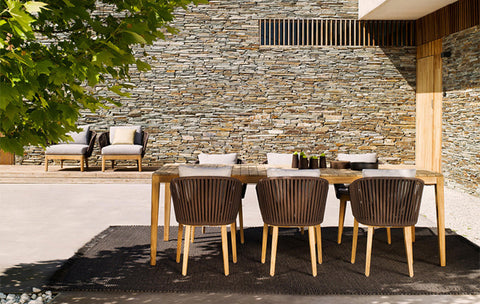


Polywood Table and Chairs for Hong Kong Outdoor Spaces
When you're furnishing a rooftop terrace in Mid-Levels or a garden in Clear Water Bay, choosing materials that can handle Hong Kong's intense heat, typhoon-force winds, and year-round humidity is essential. A polywood table and chairs set offers a compelling solution for homeowners who want the classic look of wood furniture without the constant maintenance demands. Made from high-density polyethylene (HDPE) recycled plastics, polywood furniture delivers durability and timeless aesthetics that align perfectly with Hong Kong's challenging outdoor conditions.
What Makes Polywood Different from Traditional Outdoor Materials
Polywood isn't actually wood at all. It's a branded name that has become somewhat generic for furniture made from recycled HDPE plastics engineered to mimic the appearance of painted or stained wood. Unlike teak, acacia, or other natural hardwoods commonly used in outdoor furniture, polywood won't crack, splinter, or fade significantly over time.
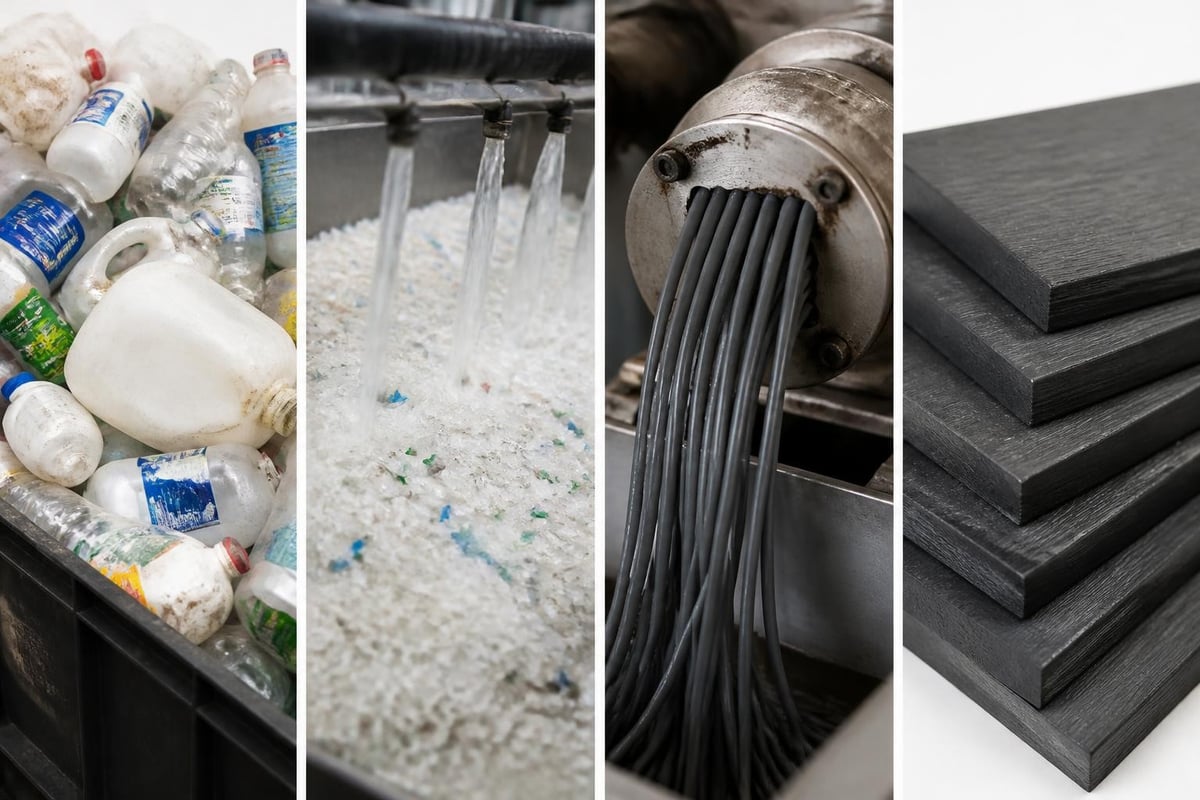
The manufacturing process transforms recycled milk jugs, detergent bottles, and other post-consumer plastics into dense lumber-like boards. These boards are then cut, routed, and assembled using stainless steel hardware to create outdoor furniture that can withstand decades of exposure.
Key characteristics that set polywood apart:
- No annual sealing or staining required – traditional wood furniture needs regular treatment to maintain weather resistance
- Fade-resistant colorant throughout the material – not just a surface coating that wears away
- Impervious to moisture – won't rot, warp, or harbor mold even in 80%+ humidity
- Insect-proof – termites and other pests have no interest in HDPE
- Marine-grade stainless steel hardware – prevents rust streaks and structural failure
For Hong Kong residents dealing with our subtropical monsoon climate, these properties translate to furniture that looks beautiful year after year with minimal intervention. According to industry performance standards for outdoor furniture, HDPE materials consistently outperform wood and wood-plastic composites in accelerated weathering tests.
Why Polywood Thrives in Hong Kong's Climate
Hong Kong's weather poses unique challenges for outdoor furniture. Our summers bring scorching sun with UV indexes regularly exceeding 10, while typhoon season delivers torrential rain and powerful winds. Winter months stay humid, creating ideal conditions for mold and mildew on porous materials.
A polywood table and chairs set handles all of these conditions without the degradation you'd see with other materials. The solid HDPE construction means there are no air pockets or cellular structures where moisture can penetrate and cause damage from within.
Temperature Performance
HDPE maintains structural integrity across a wide temperature range. On a July afternoon when your rooftop surface reaches 50°C, polywood furniture won't soften, sag, or release concerning off-gasses. During cooler winter evenings, it won't become brittle or crack.
The material does expand and contract slightly with temperature changes, which is why quality manufacturers use specialized fastening systems that accommodate this movement without loosening over time.
UV and Color Retention
Hong Kong's intense sunlight breaks down many materials quickly. Wood bleaches to gray, cheap plastics become chalky and brittle, and metal furniture can become scorching hot to touch.
Polywood incorporates UV-stabilized colorants throughout the material depth, not just on the surface. When properly manufactured, a polywood table and chairs set will maintain rich color for 15-20 years of Hong Kong sun exposure. You might notice very gradual fading after a decade, but nothing like the dramatic degradation of untreated wood or lower-grade plastics.
Moisture and Mold Resistance
This is where polywood truly excels in our climate. With relative humidity rarely dropping below 70% year-round, Hong Kong creates perfect conditions for mold, mildew, and wood rot.
HDPE absorbs virtually no moisture – typically less than 0.01% by weight. Compare this to wood-plastic composites (WPCs), which can absorb several percent moisture and support fungal growth over time. Pure HDPE polywood simply doesn't provide the environment mold needs to establish itself.
| Climate Challenge | Polywood Performance | Traditional Wood | Powder-Coated Aluminum |
|---|---|---|---|
| Heavy rain (typhoons) | Excellent – no water absorption | Poor – requires sealing | Good – may trap water in joints |
| High humidity (70-90%) | Excellent – won't support mold | Poor – requires treatment | Good – depends on coating quality |
| UV exposure (index 10+) | Very good – minimal fading | Poor – bleaches gray | Excellent – color retention |
| Salt air (coastal areas) | Excellent – chemically inert | Poor – accelerates decay | Good – marine-grade alloys needed |
Design Options and Aesthetic Considerations
Early polywood furniture was limited to a few basic colors and simple Adirondack-style designs. Today's market offers sophisticated options that complement contemporary Hong Kong homes and commercial spaces.
Popular colorways for Hong Kong settings:
- Classic white for crisp, clean Mediterranean or coastal looks
- Weathered teak brown that mimics natural hardwood
- Slate gray for modern minimalist terraces
- Black for dramatic contrast in lush garden settings
- Sand or driftwood tones for relaxed, beach-inspired spaces
The construction methods have evolved too. While traditional polywood uses visible slat designs reminiscent of wooden deck furniture, newer manufacturing techniques create smoother surfaces and more refined profiles that work beautifully in upscale settings.
When selecting a polywood table and chairs for your space, consider the design context. A casual rooftop bar area might embrace the classic slat-back chairs and slatted table top, while a formal terrace in The Peak might benefit from designs with cleaner lines and solid surfaces.
Mixing Polywood with Other Materials
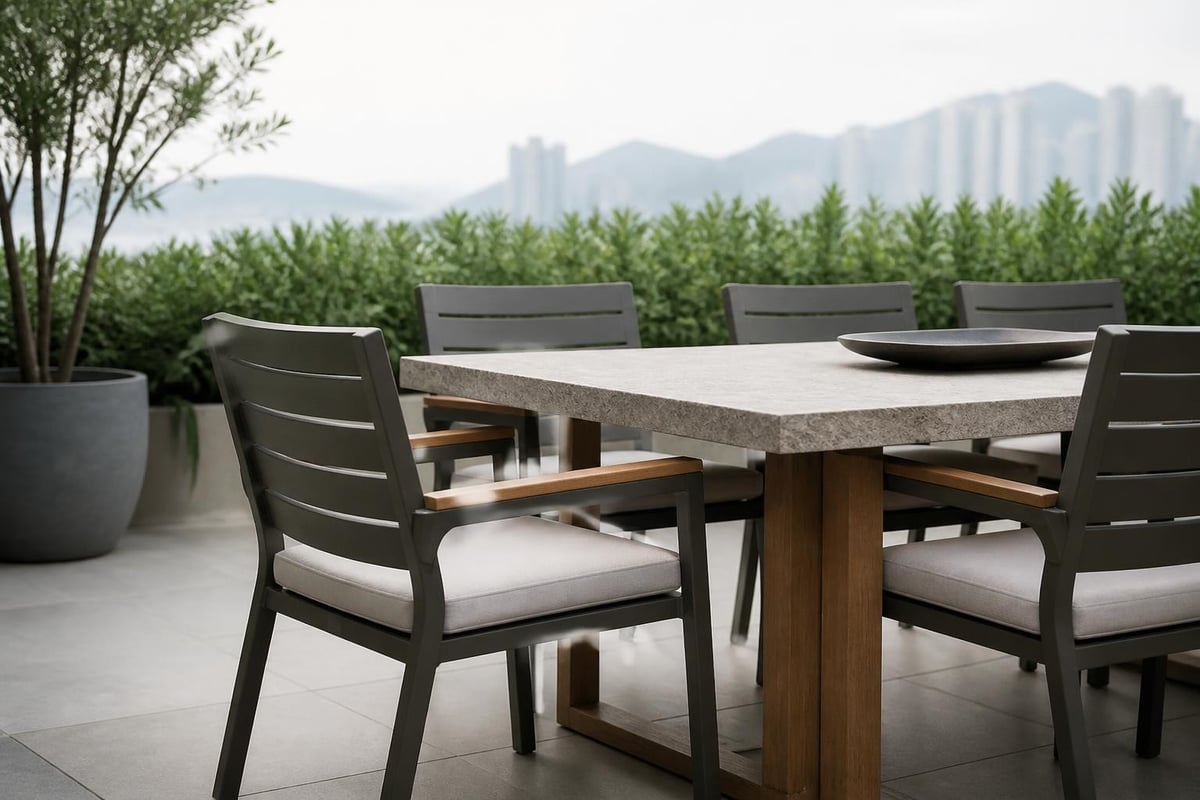
Polywood works exceptionally well as part of a mixed-material outdoor scheme. Many Hong Kong designers combine polywood dining chairs with stone or ceramic table tops, creating visual interest while capitalizing on each material's strengths.
For example, pairing polywood chairs with a granite or sintered stone table top gives you a surface that stays cool to touch and resists heat damage from serving dishes, while the chairs provide comfortable, maintenance-free seating.
You can also mix polywood pieces with premium teak or aluminum furniture to create layered outdoor living spaces. The polywood components handle the heaviest weather exposure, while more delicate materials occupy protected areas.
Maintenance Requirements and Long-Term Care
One of polywood's strongest selling points is the minimal maintenance required. Unlike wood furniture that demands seasonal care routines, polywood stays beautiful with basic cleaning.
Monthly maintenance (5 minutes):
- Spray down with garden hose to remove surface dust and pollen
- Wipe dry or let air dry – no water spots or mineral deposits
- Check that hardware remains snug (typhoon winds can gradually loosen fasteners)
Quarterly deep cleaning (15 minutes):
- Mix warm water with mild dish soap
- Scrub surfaces with soft brush to remove any stubborn dirt or tree sap
- Rinse thoroughly with clean water
- Inspect joints and connection points for debris accumulation
That's essentially it. No sanding, no sealing, no staining, no oil treatments. For busy Hong Kong professionals, this translates to more time enjoying your outdoor space and less time maintaining it.
Addressing Common Issues
Even with polywood's durability, you might encounter a few situations over the years:
Surface scratches: Light scratches often blend into the texture naturally. Deeper gouges can sometimes be minimized by gently heating the area with a heat gun, causing the plastic to slightly reflow and fill the scratch. This requires care to avoid melting the surface.
Stubborn stains: Bird droppings, tree sap, and red wine rarely cause permanent staining on HDPE. If standard cleaning doesn't remove a mark, try a specialized plastic cleaner or very fine (2000+ grit) sandpaper to gently abrade the surface layer.
Hardware corrosion: Quality polywood furniture uses 316-grade stainless steel hardware that resists Hong Kong's coastal humidity. If you notice any rust, replace fasteners immediately to prevent staining the polywood itself. Marine-grade hardware is readily available at hardware suppliers in Ap Lei Chau and Kwai Chung.
Sustainability and Environmental Considerations
Many Hong Kong buyers choose polywood partly for its environmental profile. The recycled content story is compelling – each polywood dining chair might incorporate 500-600 plastic milk jugs that would otherwise end up in landfills or our ocean.
However, it's important to understand the nuances of these environmental claims. Transparent environmental marketing requires verifiable third-party certification rather than just manufacturer statements.
Look for polywood furniture that carries certification from recognized standards bodies. The SCS Recycled Content Standard and similar programs provide independent verification of recycled material percentages. Quality manufacturers readily share these certifications.
End-of-Life Considerations
HDPE is fully recyclable, which means your polywood table and chairs can theoretically be melted down and reformed into new products after decades of use. The reality in Hong Kong is more complex – our recycling infrastructure for bulky plastic items remains limited.
When your polywood furniture eventually reaches end of life (likely 20+ years from now), contact the manufacturer first. Some companies operate take-back programs that ensure proper recycling. The material itself has value in recycling markets, particularly for applications like plastic lumber for landscaping projects.
According to consumer resources on plastic lumber, HDPE maintains its recyclability through multiple reprocessing cycles without significant degradation, unlike many other plastics.
Comparing Polywood to Wood-Plastic Composites
Some furniture marketed as "polywood" is actually wood-plastic composite (WPC) – a blend of wood fiber and plastic. While WPC offers some benefits, it performs quite differently from pure HDPE polywood in Hong Kong's climate.
| Feature | Pure HDPE Polywood | Wood-Plastic Composite |
|---|---|---|
| Moisture absorption | <0.1% | 2-6% depending on formulation |
| Mold/mildew risk | Minimal | Moderate (wood content feeds growth) |
| Fade resistance | Excellent | Good to fair |
| Weight | Heavier | Lighter |
| Texture | Smooth, plastic feel | More wood-like grain |
| Price | Higher | Lower to moderate |
For Hong Kong's humid environment, pure HDPE polywood typically outperforms WPC blends. The wood content in composites creates pathways for moisture penetration and provides organic material that can support microbial growth.
If you're considering a polywood table and chairs set, verify whether the product is pure HDPE or a composite. Manufacturers should clearly disclose material composition – if they're vague, that's a red flag.
Sizing and Space Planning for Hong Kong Homes
Hong Kong's compact living spaces require thoughtful furniture selection. A polywood table and chairs set needs to fit your available terrace or balcony area while leaving comfortable circulation space.
Standard polywood dining table sizes:
- 4-seater round: 100-110cm diameter (requires 2.5m x 2.5m space minimum)
- 4-seater rectangular: 140cm x 80cm (requires 2.5m x 2m space)
- 6-seater rectangular: 180cm x 90cm (requires 3m x 2.2m space)
- 8-seater rectangular: 220cm x 100cm (requires 3.5m x 2.5m space)
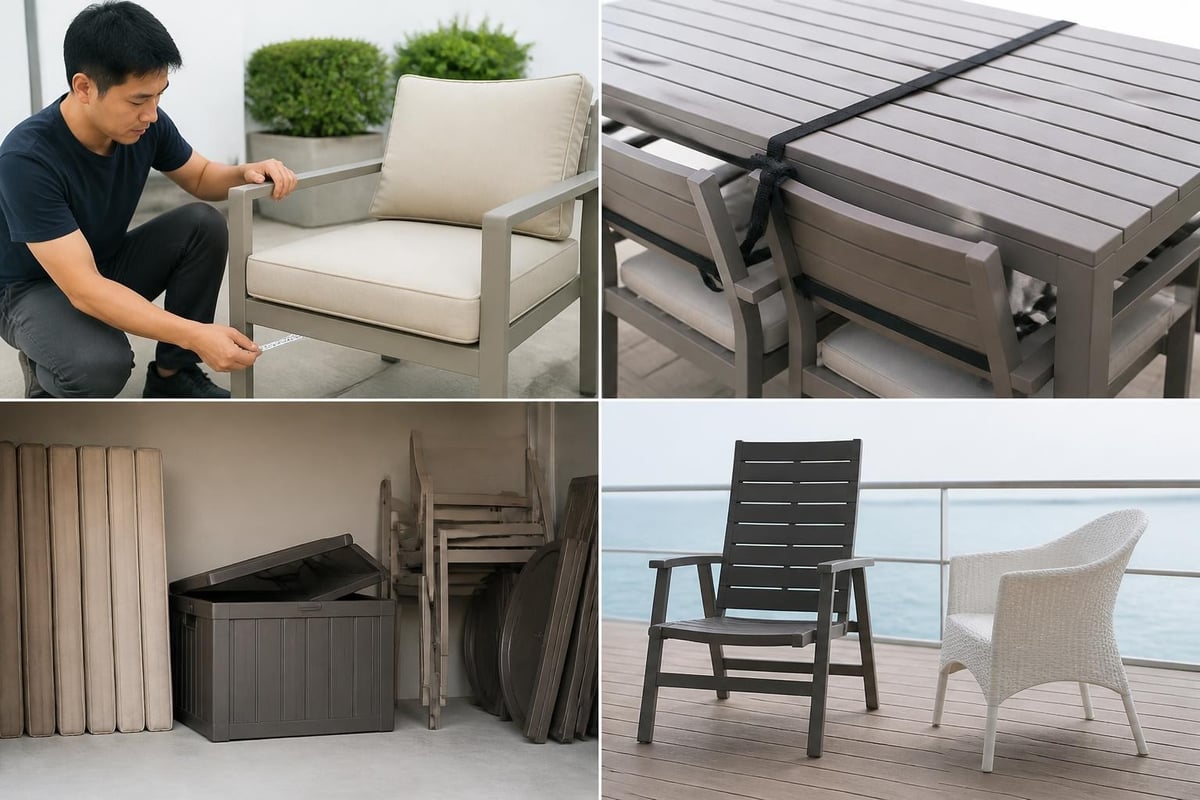
Remember to account for chair pullout space. Plan for at least 75cm behind each chair to allow comfortable seating and standing. In tight Hong Kong terraces, consider bench seating on one or both sides of the table, which tucks completely under the table edge when not in use.
Weight Considerations for Rooftop Installations
Polywood is denser than wood – a full-size polywood dining chair typically weighs 12-15kg compared to 8-10kg for equivalent teak furniture. For rooftop terraces, verify your structure's weight capacity before installing heavy furniture sets.
The density also makes polywood furniture more stable in Hong Kong's typhoon winds. Lighter aluminum or plastic furniture often requires securing or storage during Typhoon Signal 8 warnings, while heavier polywood pieces generally stay put. That said, the NOAA recommends securing all outdoor items when sustained winds exceed 75 km/h.
Price Positioning and Value Proposition
Polywood furniture typically sits in the mid-to-upper price range for outdoor furniture in Hong Kong. A quality four-seater polywood table and chairs set generally costs HK$8,000-15,000, positioning it between budget plastic furniture and premium teak or designer aluminum pieces.
The value proposition becomes clear when you factor in lifecycle costs:
5-year total cost comparison:
- Budget plastic: HK$2,000 initial + HK$2,000 replacement (year 3) = HK$4,000
- Teak: HK$18,000 initial + HK$1,200 maintenance (oil, sanding, repairs) = HK$19,200
- Polywood: HK$10,000 initial + HK$50 cleaning supplies = HK$10,050
- Powder-coated aluminum: HK$12,000 initial + HK$800 touch-up/repairs = HK$12,800
Over a decade or more, polywood's combination of durability and minimal maintenance often makes it the most economical choice. You're not replacing degraded furniture or spending weekends on maintenance projects.
For Hong Kong commercial projects – hotels, restaurants, clubhouses – the reduced labor costs for furniture maintenance make polywood particularly attractive. Property managers appreciate furniture that looks presentable year-round without requiring staff time for refinishing or repairs.
Finding Quality Polywood Furniture in Hong Kong
Not all polywood is created equal. Hong Kong's outdoor furniture market includes both high-quality North American and European-manufactured pieces and lower-grade products from factories with inconsistent quality control.
Quality indicators to look for:
- Heavy weight – denser HDPE means better durability and UV resistance
- Through-body color – cut edges should show consistent color, not just surface coating
- 316-grade stainless steel hardware – magnetic stainless steel (indicating lower grades) will eventually corrode
- Comfortable contours – better manufacturers invest in ergonomic design, not just basic shapes
- Detailed joinery – mortise-and-tenon style connections outlast simple butt joints
- Manufacturer warranty – reputable brands offer 10-20 year warranties on material integrity
When shopping for a polywood table and chairs, ask dealers about manufacturing origin, warranty terms, and whether replacement parts are available. A set that seems like a bargain but lacks support will frustrate you when you need a replacement chair leg or table support in year five.
Many discerning Hong Kong customers appreciate the craftsmanship and design available in comprehensive outdoor dining table and chair collections that combine premium materials with weather-resistant engineering specifically suited to our subtropical climate.
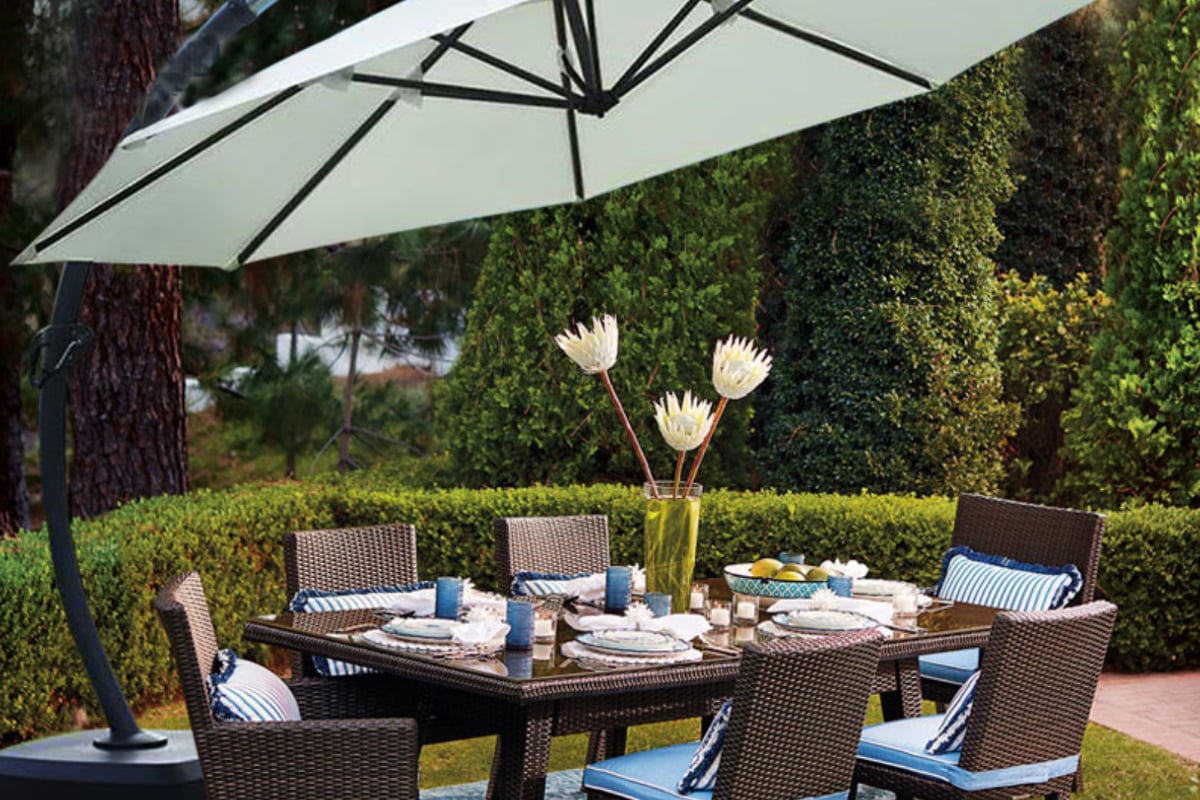
Installation and Assembly Considerations
Most polywood furniture arrives requiring some assembly. The good news is that HDPE doesn't splinter like wood, making it safer to handle. The bad news is that the weight and density can make assembly physically demanding.
Assembly tips for Hong Kong conditions:
- Work in shade – black or dark brown polywood sitting in direct sun can become uncomfortably hot to touch
- Use proper tools – invest in quality hex drivers and socket wrenches; cheap tools strip fasteners in dense HDPE
- Don't overtighten – HDPE compresses slightly under pressure; overtightening can cause stress cracks over time
- Allow thermal expansion – if assembling in air-conditioned space for rooftop installation, joints may feel slightly loose once furniture heats outdoors
- Two-person minimum – a full-size polywood dining table typically requires two people to safely position and assemble
For high-rise installations, factor in delivery logistics. Polywood's weight means you may need to arrange service elevator access or crane lifting for rooftop placements in buildings without adequate elevator capacity. Check your building's delivery and installation policies before ordering large sets.
Styling Your Polywood Dining Space
A polywood table and chairs set provides a versatile foundation for your outdoor dining aesthetic. The furniture's clean lines and consistent finish work well with various decorating approaches popular in Hong Kong.
Coastal Contemporary
Pair white or driftwood-toned polywood with:
- Blue and white outdoor cushions in weather-resistant Sunbrella fabric
- Natural fiber placemats and table runners (store indoors between uses)
- Hurricane lanterns with LED candles for evening ambiance
- Potted palms or bird of paradise plants for tropical accents
Modern Minimalist
Combine charcoal or black polywood with:
- Monochromatic cushions in neutral tones
- Sleek ceramic or concrete planters
- Contemporary outdoor lighting with clean geometric forms
- Sparse table settings that emphasize negative space
Garden Organic
Use natural wood-tone polywood with:
- Botanical print cushions featuring Hong Kong native plants
- Terracotta pots with herbs and edible plants
- Vintage-inspired metal lanterns
- Wooden serving pieces and natural fiber textiles
Regardless of style, remember that cushions and textiles will require more maintenance than your polywood furniture. Invest in quality outdoor-grade fabrics with proper UV and moisture resistance, and plan for storage solutions to protect soft goods during heavy rain. Consider weather-resistant storage boxes that can tuck under tables or against walls.
Performance in Commercial Settings
Hong Kong's hospitality and residential property sectors increasingly specify polywood for rooftop bars, clubhouse terraces, and amenity areas. The material's combination of aesthetics and durability aligns with the demands of high-traffic commercial environments.
Commercial advantages:
- Consistent appearance: all furniture ages uniformly, avoiding the patchwork look of replaced pieces
- Reduced maintenance budgets: property teams can redirect labor from furniture care to guest-facing services
- Liability reduction: no splinters, sharp edges from wood damage, or rust stains on clothing
- Brand image: presents a well-maintained, cared-for aesthetic that supports luxury positioning
Commercial buyers should specify contract-grade polywood with reinforced joinery and thicker material gauges than residential furniture. The incremental cost pays dividends in longevity when furniture experiences daily use by multiple guests.
Whether you're furnishing a private terrace in Discovery Bay or outfitting a commercial rooftop in Central, polywood table and chairs offer a compelling blend of beauty, durability, and practicality for Hong Kong's demanding climate. The material's resistance to humidity, UV exposure, and typhoon conditions, combined with virtually zero maintenance requirements, makes it an investment that delivers value year after year. When you're ready to explore premium outdoor furniture options engineered for Hong Kong's subtropical weather, Hong Kong Outdoor Furniture offers elegantly crafted collections that bring timeless style and exceptional comfort to your outdoor living spaces.