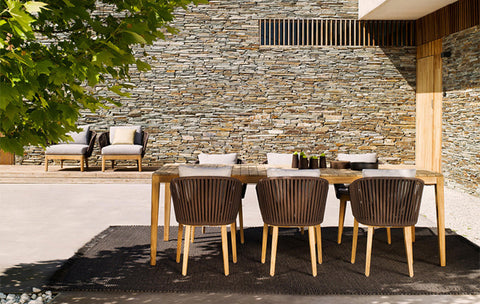


Wood Dining Outdoor Table Guide for Hong Kong Homes
A wood dining outdoor table can work well in Hong Kong, but only if you pick the right kind of wood, or a wood-look material, for a climate that is wet, humid and storm-prone. Dense hardwoods like teak handle the weather well, while plastic wood gives you a similar warm look with far less upkeep on a balcony or rooftop.
Hong Kong is hard on outdoor furniture, and the numbers explain why. The Hong Kong Observatory recorded 2,558.7 mm of rainfall in 2025, with more than 80% of it falling from July to September. Annual mean relative humidity was 73%. Untreated softwood in that environment tends to swell, split and grow mildew. This guide covers which materials hold up, how to size a table for your space, and how to care for it through typhoon season.
Which wood suits a wood dining outdoor table in Hong Kong?
Teak is a strong natural wood choice for outdoor dining in Hong Kong, followed by other dense hardwoods such as acacia and eucalyptus, with plastic wood as the lowest-maintenance alternative. The right choice depends on how much care you want to give the table and how exposed your space is.
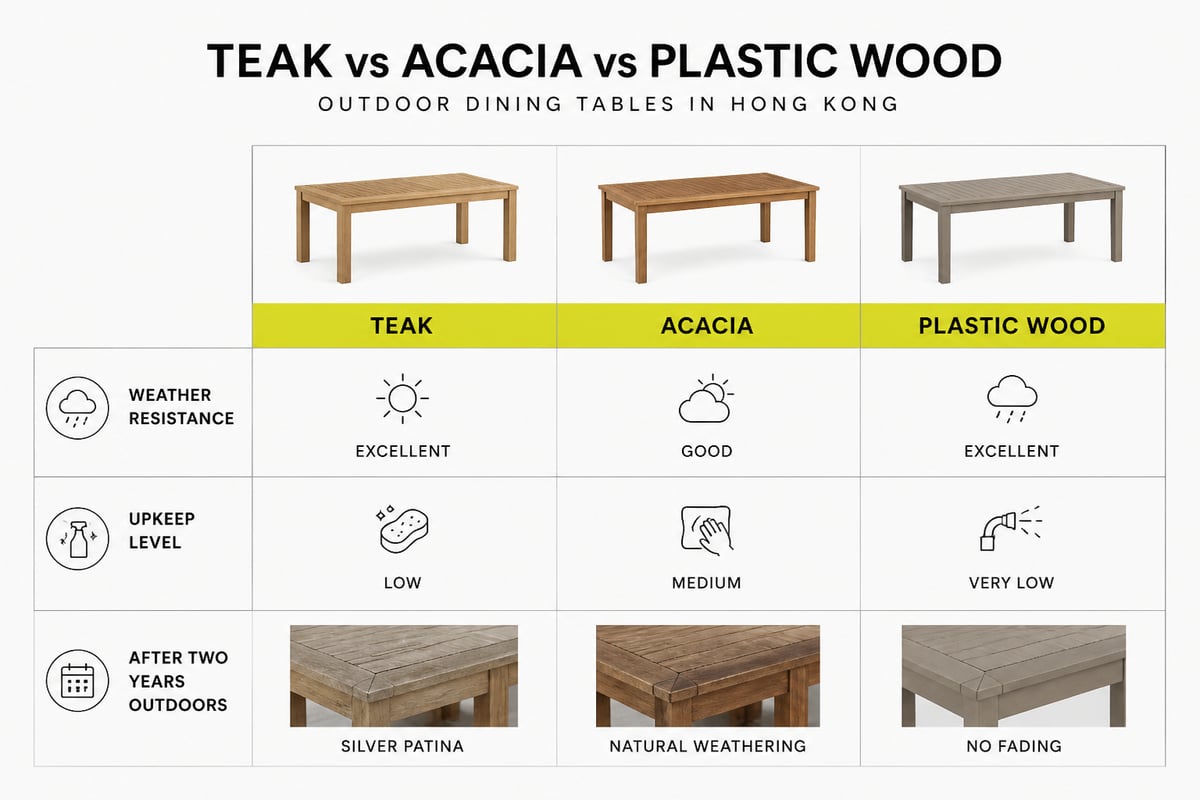
Here is how the main options compare for a typical Hong Kong balcony, terrace or garden:
| Material | Weather resistance | Upkeep | Look over time |
|---|---|---|---|
| Teak | Very good; natural oils resist moisture and rot | Low to moderate; occasional cleaning and oiling | Ages to a silver-grey unless oiled |
| Acacia / eucalyptus | Good if sealed | Moderate; needs regular resealing | Stays warm if maintained, darkens or cracks if neglected |
| Pine and other softwoods | Poor outdoors | High | Mildew and warping set in fast |
| Plastic wood (wood-plastic composite) | Very good; does not rot or absorb water | Very low; wipe clean | Consistent color, minimal fading |
Softwoods like pine are usually sold cheaply, and in a humid city they tend to disappoint within a short time. If you love real timber, teak is the one to invest in. If you want to enjoy dinner rather than schedule maintenance, plastic wood is the practical answer.
Why plastic wood is a strong fit for balconies and rooftops
Plastic wood gives you the grain and warmth of timber while resisting swelling and rot, which makes it one of the easiest materials to live with in Hong Kong. The boards are made from a blend of wood fiber and plastic, so they shrug off the daily cycle of humid mornings, sudden showers and strong sun.
A few practical advantages for local homes:
- No repainting or sealing. A wipe with mild soapy water is usually enough after a barbecue.
- No splinters. Useful for families with children who will inevitably run around the table.
- Stable in humidity. Boards do not cup or crack the way natural wood can between wet and dry spells.
- Pest-resistant. Wood-boring pests are a concern in Hong Kong gardens and low-floor terraces, and plastic wood is not a food source for them.
If this appeals, the Foresta plastic wood dining table set and the plastic wood dining table set show how the look translates to a finished dining setup. For a deeper comparison of materials, the Hong Kong Outdoor Furniture blog has a useful piece on polywood table and chairs.
How to size a dining table for your Hong Kong outdoor space
Choose a table by working backward from your floor area and your usual number of guests, leaving enough clear space behind each chair so people can sit and move comfortably. Many Hong Kong balconies and terraces are tighter than they look once chairs are pulled out.
Use this quick rule of thumb for seating:
- Two to four people: a round or small rectangular table suits a compact balcony. Round tables free up corners and make conversation easier.
- Four to six people: a rectangular table around 150 to 180 cm long works for a standard terrace or a medium rooftop.
- Six to eight people: you need a longer rectangle or an extendable top, and a space deep enough to walk around it.
Measure the space first, including door swings, air-conditioner platforms and railings, so nothing blocks the table. Then tape the table's footprint on the floor and place your chairs around it to see how it feels. If a round shape suits your layout, the notes on outdoor furniture round dining tables explain how to make the most of a smaller area.
What to look for in construction, not just the tabletop
A good outdoor dining table lasts because of its frame, fixings and finish as much as the visible wood or wood-look surface. In a humid city, hidden parts are usually where failure starts.
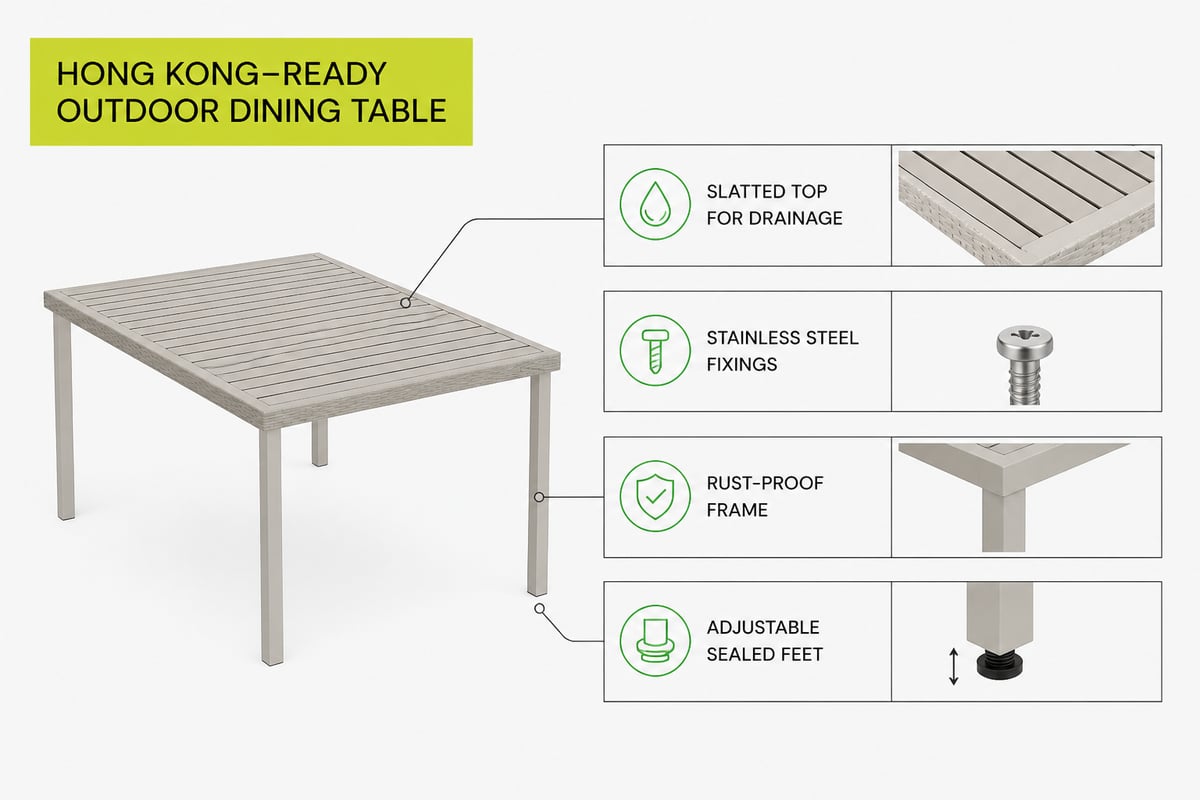
- Frame material. Powder-coated aluminum or rust-proof rattan over a stable frame avoids the corrosion that plagues cheap steel in sea air.
- Fasteners. Stainless steel screws and bolts resist rust. Plain steel hardware leaves orange streaks on a light tabletop.
- Slatted or gapped tops. Small gaps between boards let rainwater drain instead of pooling.
- Foot design. Adjustable or sealed feet protect the legs from sitting in standing water on uneven balcony floors.
- Weight. A heavier table is generally more stable in wind, though you will still want to secure it in a storm.
If you want a more tailored shape or finish, Hong Kong Outdoor Furniture offers made-to-order pieces, including custom-made rattan, so it is worth asking about options that fit an awkward corner or an unusual rooftop layout.
A matching set that suits everyday dining
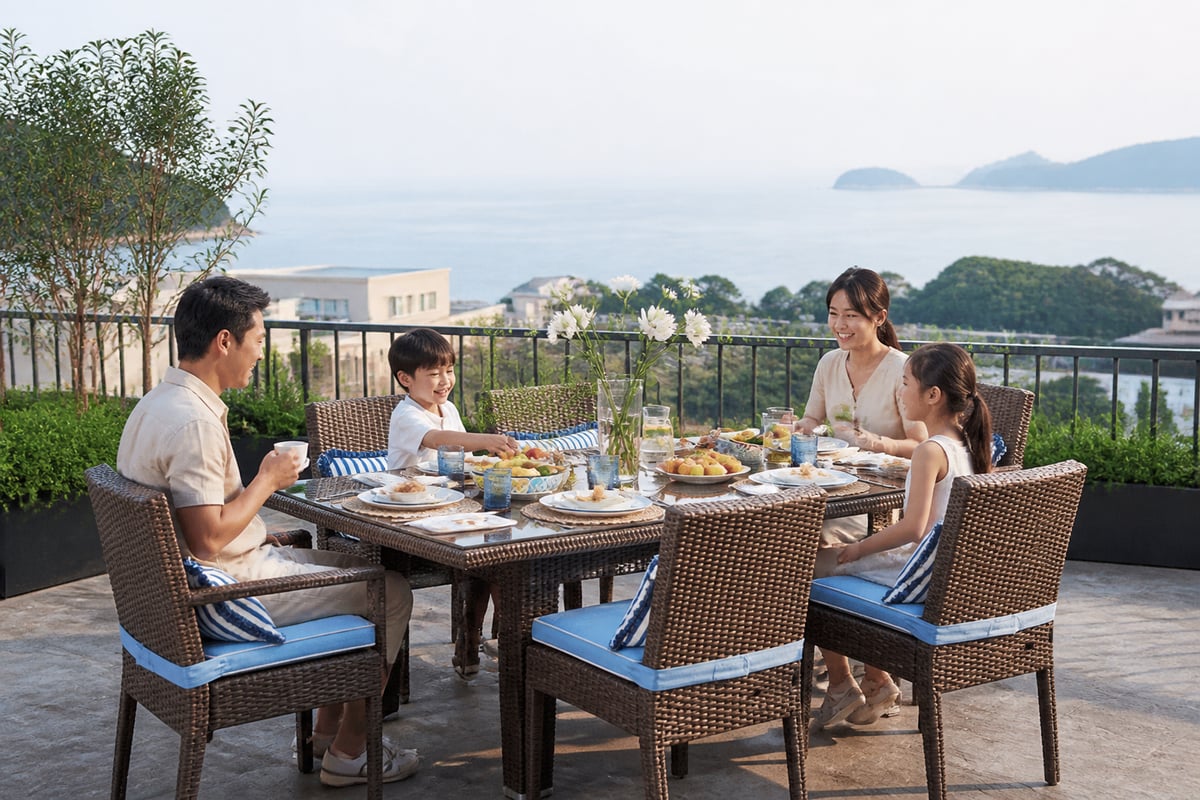
Buying the table and chairs together helps keep heights, proportions and finishes in harmony, which matters outdoors where the whole setup is visible at once. A matched set also makes it easier to check that chairs fit comfortably under the table edge.
The Outdoor Dining Table & Chairs Set collection brings together sets for balconies, patios, gardens, rooftops and poolside spaces, designed for family meals and entertaining friends. Shoppers who like a lighter, more contemporary look might also compare it with the Nestwood dining set, which shows how warm tones and clean lines can sit comfortably together.
Hong Kong Outdoor Furniture offers pieces designed for the local humid climate, and customers have shared their views. Mark S. wrote, "I'm truly impressed with the durability and style of the furniture we received," and Mia W. described "Superb Quality and Excellent Customer service." If budget is a factor, you may want to ask about installment payment options.
How to care for a wood dining outdoor table through the seasons
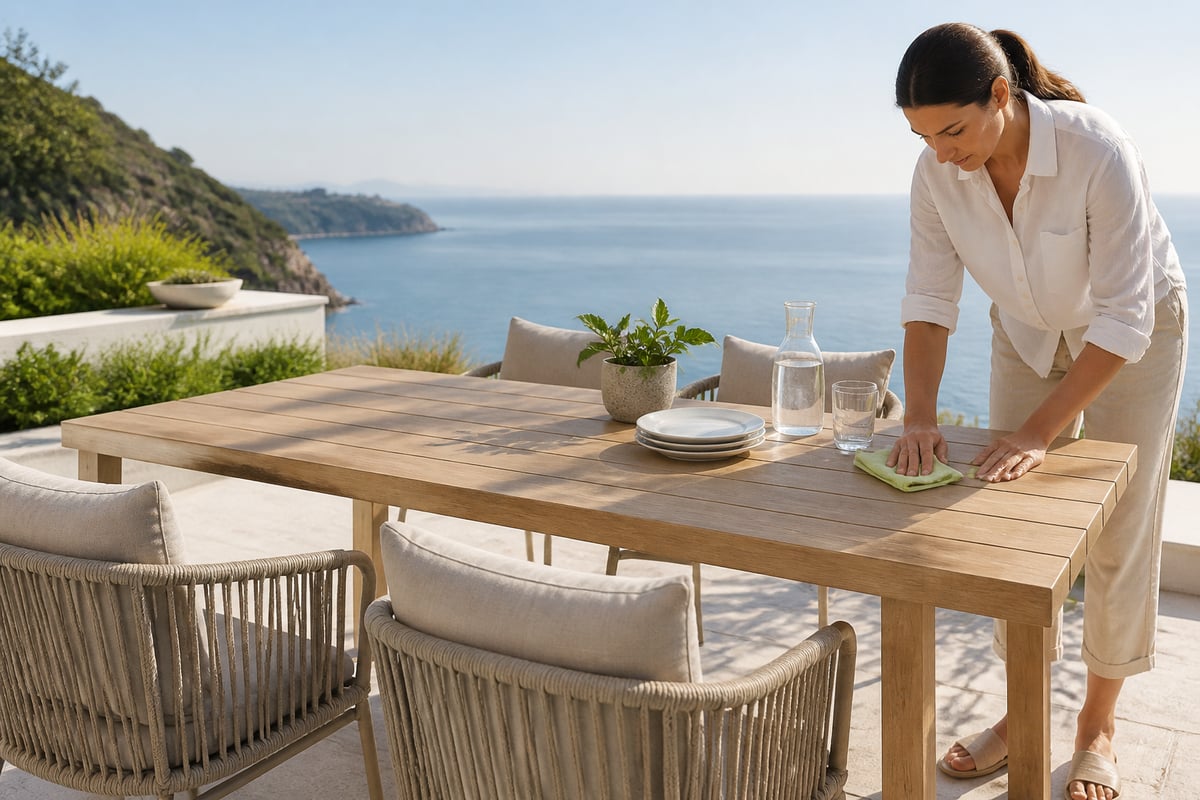
Rinse your table regularly, dry it after heavy rain where you can, and adjust your routine for the wet summer months, when mildew and moisture damage tend to develop. With plastic wood, care is mostly a quick wash. With real wood, you need a slightly firmer schedule.
For natural teak or sealed hardwood:
- Wash monthly with warm water, mild soap and a soft brush, moving along the grain.
- Dry and ventilate. Do not cover a damp table with an airtight cover. Trapped moisture breeds mildew in humid weather.
- Re-oil or reseal once or twice a year if you want to keep the original honey tone rather than letting it weather to silver-grey.
- Check joints and fixings at the start of the wet season, tightening anything loose.
- Treat spots quickly. Wipe up food and drink promptly, and deal with mildew early using a diluted mild cleaner rather than harsh bleach.
Hong Kong's humidity is high but not constant. The Observatory's figures show 2025's mean relative humidity of 73% was 5 percentage points below the 1991–2020 normal, yet the damp months of late spring and summer remain the stretch to watch. Breathable covers and good airflow around the table do more than any single product.
Typhoon-proofing your outdoor dining area
When a tropical cyclone warning signal is issued, bring cushions, tableware and lightweight items inside and secure anything that could be blown away, because wind can turn loose furniture into a hazard for you and your neighbors. The Hong Kong Observatory's guidance on precautions when tropical cyclone warning signals are in force advises securing or bringing indoors objects likely to be blown away.
For a dining set, that usually means:
- Moving chairs against a wall or indoors, and stacking them if they are designed to stack.
- Securing a heavy table to a fixed point where building rules allow, or moving it to the most sheltered corner.
- Taking down parasols entirely. An open parasol catches wind like a sail.
- Clearing the surface of vases, candles and décor.
Rooftops and high-floor balconies feel the strongest gusts, so be especially cautious there. A heavier table frame is a quiet advantage in these spaces, and it is another reason to look closely at construction when you choose.
Styling your table so it feels like a real dining room
A few considered touches can turn a wood dining outdoor table into the heart of a space you actually want to use. Start with the surface: a runner or a set of placemats in a weather-friendly fabric brings color without hiding the grain.
Then think about the setting around it:
- Shade. A parasol or retractable awning makes midday lunches comfortable in Hong Kong's strong sun and keeps the tabletop from fading.
- Lighting. Solar lanterns or warm string lights extend dinners into the evening and suit apartments without outdoor sockets.
- Greenery. Potted herbs and compact palms soften a rooftop, and they pair naturally with timber tones.
- Cushions. Quick-dry outdoor fabric on the chairs adds comfort and survives surprise showers.
If you entertain often, a sofa-and-table combination can suit larger terraces. The guide to a sofa dining table set shows how to mix lounge comfort with a proper dining surface.
Frequently asked questions
Can real wood stay outside year-round in Hong Kong?
Dense hardwoods like teak can, provided they are cleaned and occasionally oiled or left to weather naturally, though results depend on exposure. Softer woods struggle with the humidity and heavy summer rain, and are better kept for covered, sheltered balconies if used at all.
Is plastic wood as sturdy as real wood?
For outdoor dining in Hong Kong, plastic wood is durable and generally resists rot and water damage. It lacks the exact feel of natural grain up close, but from a normal seating distance it looks convincingly like timber.
How many people fit around a typical table?
A table around 150 cm long seats four comfortably, and one around 180 to 200 cm seats six. Allow generous table width per person, and leave ample space behind each chair for movement.
Will rain damage my table if I forget to cover it?
Plastic wood and well-maintained teak will generally cope with ordinary rain. The concern is standing water and long periods of trapped dampness, so a slatted top, good drainage and airflow matter more than a heavy cover.
Can I get a table made to fit an unusual space?
Hong Kong Outdoor Furniture offers made-to-order and custom-made rattan pieces, so it is worth contacting the team through the product pages to discuss what is possible for your balcony or rooftop.
Measure your outdoor space this weekend, mark the table footprint with tape, and decide how many people you want to seat before you start browsing. Once you have those numbers, Hong Kong Outdoor Furniture can help you match a weather-ready table to them. Take a look at the Outdoor Dining Table & Chairs Set range first, then View Sofa Set Collection at Hong Kong Outdoor Furniture to see how a lounge area could sit beside your dining space.