

Cast Iron Table and Chairs: Outdoor Buying Guide
A cast iron table and chairs set is a heavy, ornate, long-lasting choice for outdoor dining, but in Hong Kong it only pays off if you plan for rust, weight and space before you buy. The metal is poured into molds, which gives it detailed scrollwork and a solid feel that lighter materials rarely match. It also holds moisture against its surface, and our humid summers are hard on any untreated iron. This guide covers how cast iron differs from wrought iron, what to check on a balcony or rooftop, how to size a set, and how to keep it looking good through typhoon season.
What Makes a Cast Iron Table and Chairs Set Different
Cast iron is made by pouring molten iron into a mold, which is why every leaf, vine and curve in a set can be repeated exactly across the table and each chair. Wrought iron, by contrast, is shaped by heating and bending bars, so it tends to look sleeker and more hand-forged.
The practical differences matter more than the vocabulary:
- Weight: Cast iron is dense. A full dining set can be far heavier than aluminum, resin or rattan, which helps in wind but complicates moving furniture around.
- Detail: Molded pieces carry intricate patterns that would be costly to produce any other way.
- Brittleness: Cast iron resists bending, but a hard knock on a corner can crack it, where wrought iron would dent.
- Finish dependence: The look and lifespan of the set depend almost entirely on the powder coat or paint over the metal.
If you like the traditional look but not the weight, our guide to wrought iron patio tables explains the lighter alternative, and the cast iron garden furniture overview shows how the style works across a whole garden.
How Hong Kong's Climate Treats Cast Iron
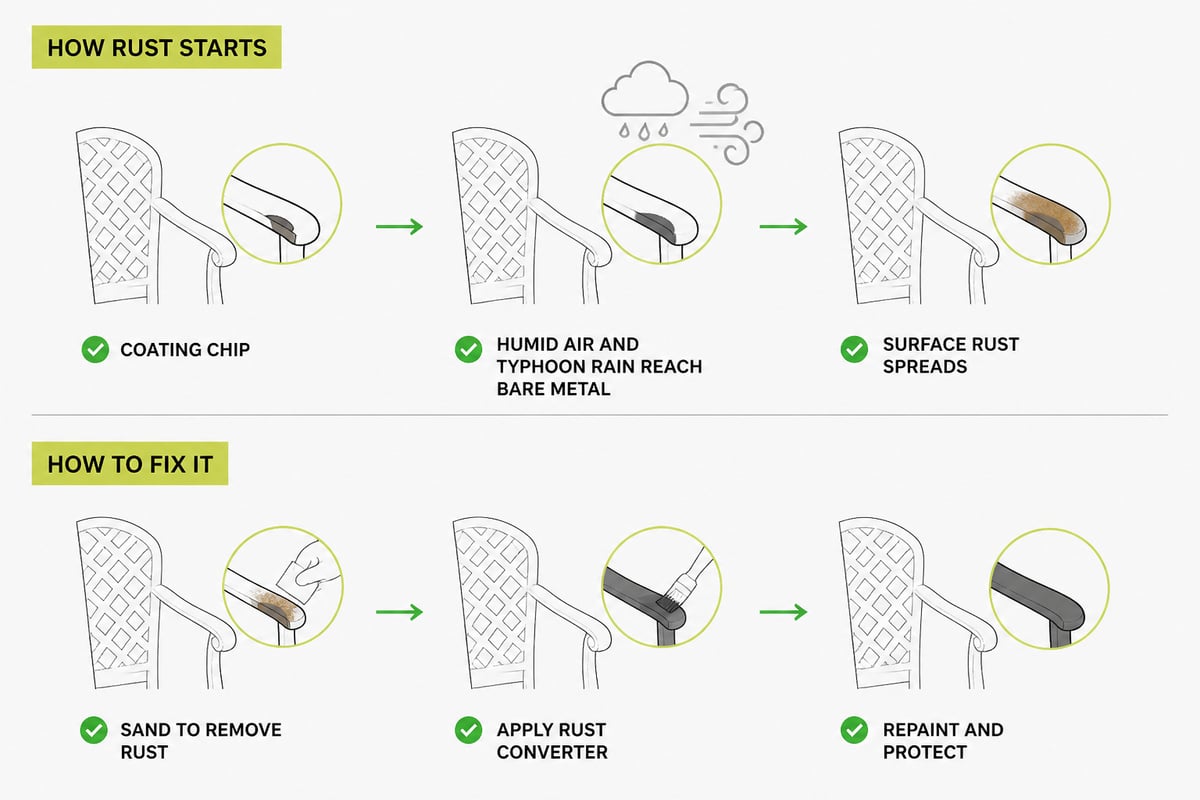
Hong Kong's long humid season, salt in the air near the coast and sudden typhoon rain make rust the main risk for any iron furniture. Iron rusts when bare metal meets moisture and oxygen, and our summers supply plenty of both.
A few local factors shape how a set ages:
- Humidity: Damp air lingers for months, so even a covered balcony stays moist. Chips in the coating become rust spots quickly.
- Salt exposure: Seaside homes in Repulse Bay, Sai Kung or Discovery Bay see faster corrosion on any exposed metal.
- Typhoon rain: Driving rain gets under covers and into joints. Water that pools on a flat tabletop or in a chair seat needs somewhere to drain.
- Heat: Dark iron absorbs sun on an open rooftop and can be too hot to touch in July, so shade or cushions help.
None of this rules cast iron out. It means the coating quality, drainage holes and your upkeep habits carry more weight here than they would in a drier city.
Balcony, Rooftop or Garden: Where Cast Iron Works Best
A cast iron table and chairs set suits a garden or a sheltered terrace best, and needs extra thought on balconies and rooftops where weight limits and wind exposure change the equation.
Balconies
Check your building's rules and structure before buying anything heavy. Balcony floors in older Hong Kong blocks may not suit concentrated loads, and a dining set with several people seated adds up. If you rent, confirm with your landlord or management office. A compact bistro set, with a small round table and two chairs, keeps both weight and footprint modest.
Rooftops
Weight is an advantage in wind, since light chairs can slide or tip in a strong gust. The trade-off is sun exposure and the effort of carrying heavy pieces up stairs. Plan your delivery route, because many village-style houses and walk-ups have no lift access.
Gardens and terraces
This is where cast iron looks most at home. Stable ground, room to move chairs and a bit of tree shade all help. Set legs on pavers rather than bare soil so moisture does not creep up the feet.
Sizing Your Table and Chairs
Pick the table size from how many people you seat most often, then check that the space around it leaves room to move. Published outdoor sizing guides give useful starting points.
A Bed Kingdom size guide suggests a 90 to 100 cm round or square table for four, or a 120 to 160 cm long table, and a 120 cm round or 140 to 210 cm long table for six. It also recommends roughly 90 to 100 cm between the table edge and fixed obstacles where possible.
Height matters for comfort too. An Ornate Home dining set guide puts a standard outdoor table at 29 to 30 inches high, paired with chairs at 17 to 19 inch seat heights, and recommends 36 inches of clearance around the table for movement and chair placement.
| Seats | Typical table | Space to plan for |
|---|---|---|
| 2 | Small round or square bistro table | A compact corner of a balcony |
| 4 | 90 to 100 cm round or square, or 120 to 160 cm long | Around 90 to 100 cm free on every side |
| 6 | 120 cm round, or 140 to 210 cm long | Plan a generous dining area around the table |
Many Hong Kong balconies are narrow, so measure the actual depth, then subtract the space needed to pull a chair out and sit down. If the numbers do not fit, a bar-height setup or a slimmer table is more realistic than squeezing in a full dining set.
Cast Iron Compared With Other Outdoor Materials
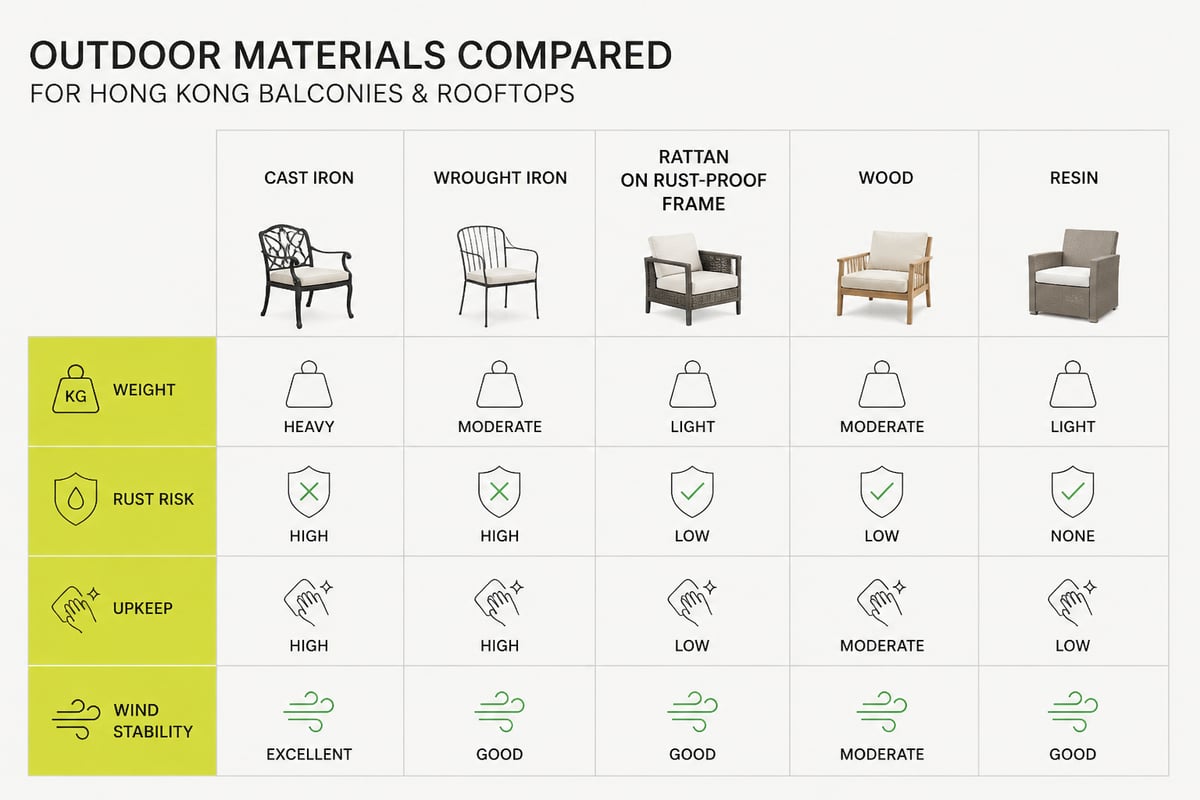
Cast iron wins on heritage looks and stability, and loses on weight and maintenance in damp conditions. Here is how it stacks up against the materials Hong Kong buyers usually weigh it against.
- Cast iron: Heavy, ornate and stable in wind. Needs coating upkeep to resist rust.
- Wrought iron: Lighter and more slender, with a similar rust risk and the same need for good finishing. See our page on iron table and chairs for more on that style.
- Rattan over a rust-proof frame: Light, warm and made for humidity. Better suited to balconies where weight or moisture is a concern.
- Wood: Warm and natural, but needs sealing against damp. Our wooden garden table and chairs guide covers it.
- Plastic and resin: Light and low cost, though the look is less refined. Our guide to plastic outdoor table and chairs goes through the pros and cons.
If you love the iron look but want something kinder to a humid balcony, a lighter frame with a rattan seat can bring the same elegance with less upkeep.
What to Check Before You Buy
Inspect the coating, the joints and the drainage first, because these decide how the set will age far more than the pattern does.
- Coating quality: Look for an even powder coat with no thin patches, drips or bare edges. Ask what the finish is and whether touch-up paint is available.
- Joints and welds: Cast pieces are often bolted or welded together. Rough or rusty welds suggest weak finishing underneath.
- Drainage: Slatted or perforated tabletops and seats shed water. Solid flat surfaces collect it.
- Foot caps: Plastic or rubber feet lift the iron off wet floors and protect tiles from scratches and rust stains.
- Chair comfort: Iron seats are unforgiving. Plan on seat cushions, and choose a design with a gently curved back.
- Delivery access: Confirm lift or stair arrangements before ordering, since heavy sets are hard to carry up several flights.
Caring for a Cast Iron Set Through the Year
A little regular care keeps a cast iron set looking sharp for years, and it is easiest if you tackle chips early rather than after rust has spread.
- Wipe down after rain: A dry cloth on joints and flat surfaces takes a minute and prevents standing moisture.
- Inspect each spring and autumn: Check welds, feet and any scratches before and after the wet season.
- Treat chips quickly: Sand the spot lightly, apply a rust converter or primer, then touch up with matching exterior paint.
- Cover or move under shelter: Before typhoon warnings, move the set indoors or against a wall and strap down covers.
- Avoid abrasive cleaners: Mild soapy water is enough, and scouring pads can strip the coating you are trying to protect.
A Lighter Alternative for Humid Balconies
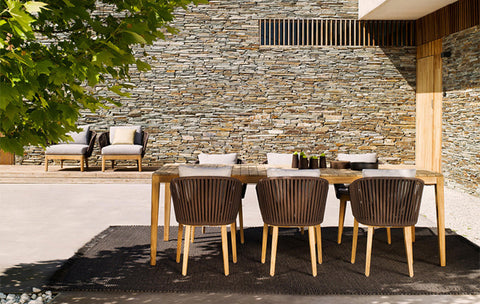
If the weight and upkeep of iron feel like too much for your space, a dedicated outdoor dining set built for Hong Kong conditions is worth a look. Hong Kong Outdoor Furniture makes furniture to order to withstand the city's humid climate, including rust-proof rattan pieces with high quality workmanship.
Their Outdoor Dining Table & Chairs Set collection combines weather-resistant performance with timeless style for balconies, patios, gardens, rooftops and poolside spaces. Delivery covers Hong Kong, with stair delivery available per floor, and instalment payments are available through hoolah.
Styling a Cast Iron Table and Chairs Set
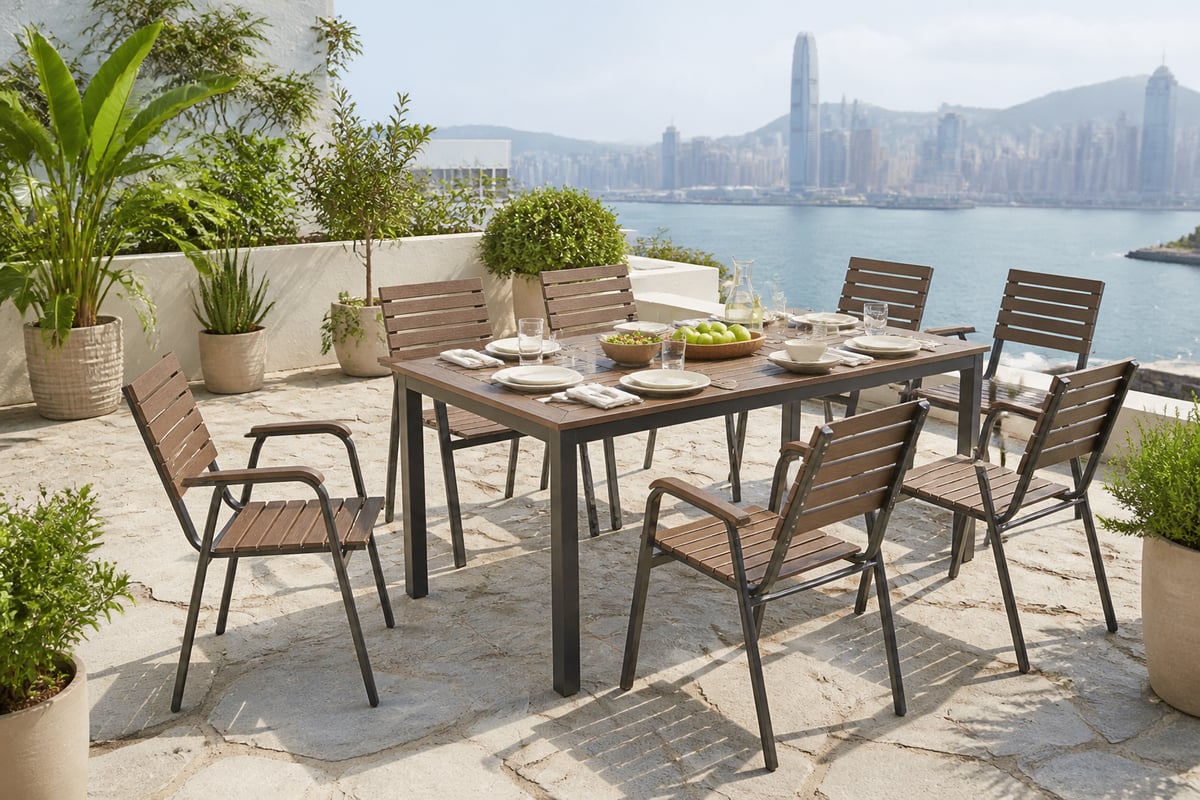
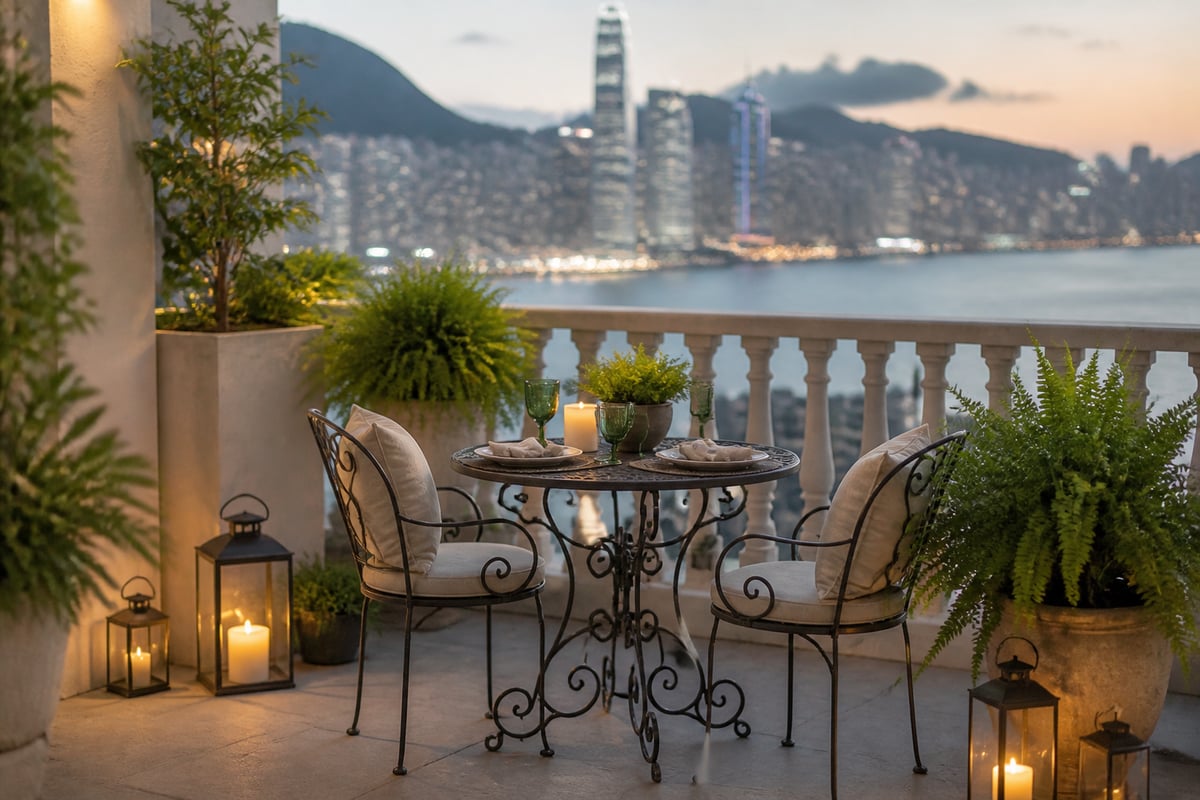
Cast iron looks best when you let its detail stand out, so keep the surroundings simple and layer in softness with textiles and plants. A few ideas that suit Hong Kong homes:
- Soften the seats: Weather-resistant cushions in cream, sage or navy make iron chairs comfortable and add color.
- Add greenery: Potted ferns, bamboo palms and trailing plants work well with scrolled metal and cope with humidity.
- Use a table runner and lanterns: Evening dining is the best time outdoors in summer, and warm light shows off the metalwork.
- Keep the palette tight: Black or deep green iron pairs well with white planters and natural stone tiles.
- Layer with a rug: An outdoor rug under the set protects the floor from feet and shapes the dining area on a rooftop.
Frequently Asked Questions
Will cast iron rust in Hong Kong?
Bare cast iron will rust here, and even a coated set can show rust where the finish chips. A good powder coat, quick touch-ups and shelter during storms slow the process considerably.
Is a cast iron table and chairs set too heavy for a balcony?
It can be, depending on the structure and size of the set. Check building rules and keep to a compact bistro table and two chairs if you are unsure.
How do I stop iron chairs getting too hot in the sun?
Add cushions, use shade from a parasol or pergola, and avoid placing the set in full afternoon sun on an open rooftop.
What is easier to maintain, cast iron or rattan?
Rust-proof rattan generally asks for less upkeep in humid conditions, since there is no metal coating to protect. Iron rewards you with weight and traditional detail but needs regular checks.
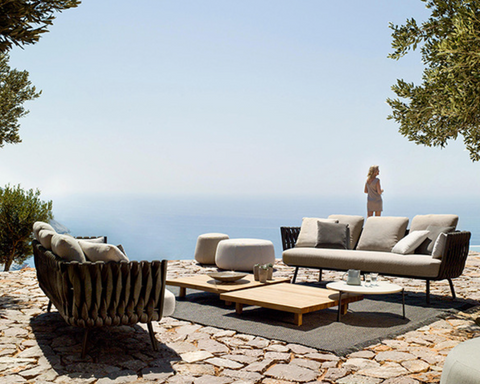
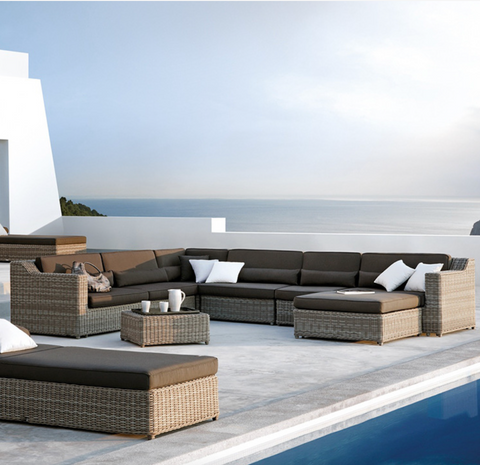
Before you shortlist anything, measure your balcony or terrace depth and mark out the table footprint with tape so you can see how it feels with chairs pulled out. If you want a set built for Hong Kong humidity with less upkeep than iron, take a look at the Outdoor Dining Table & Chairs Set range, then explore how Hong Kong Outdoor Furniture can furnish the rest of your space, and View Sofa Set Collection to add a comfortable lounge area beside your dining table.